Category Archives: Death Penalty & Legal Analysis in China

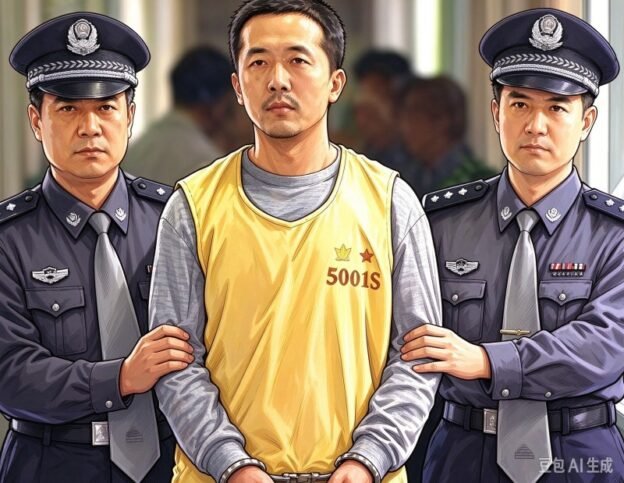
2002 Nanjing Tangshan poisoning case 1

Nanjing Tangshan Poisoning Case (2002): Shop Owner Poisoned Rival’s Food, Killing 42 — Caught in 78 Hours and Executed

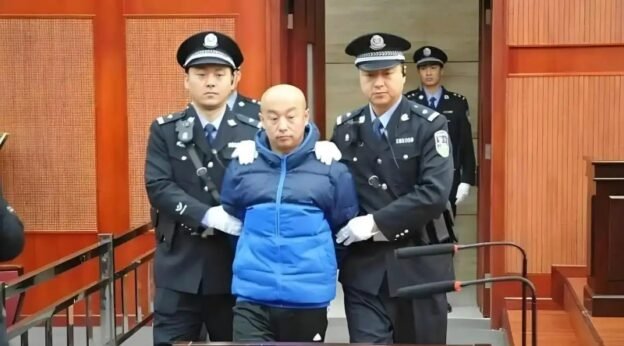
On the early morning of September 14, 2002, in Tangshan Town, Jiangning District, Nanjing, people began a new day as usual.Students from Zuochang Middle School bought breakfast on their way to school, and on the construction site at Donghu Lidao, migrant workers ate freshly bought sesame cakes and fried dough sticks.No one realized that a deadly poison had been mixed into these seemingly ordinary foods.A few hours later, all the hospitals in Tangshan Town were filled with poisoned victims, and the death toll kept rising, eventually settling at 42.The perpetrator of this poisoning case was Chen Zhengping, the owner of another noodle and food shop in the town.His reason for poisoning was chillingly simple: his competitor’s business was better than his.

I. Two Noodle Shop Owners

Chen Zhengping, 32, was from Shangye Village, Wujiang Town, Pukou District, Nanjing, and had a junior high school education.In 1992, he had been sentenced to two years and six months in prison for theft.After completing his sentence and being released, he came to Tangshan Town in Jiangning District and opened a noodle and food shop called “Juhong,” doing breakfast business.

In Tangshan Town, there was another noodle and food shop, “Zhengwu” Noodle Shop, whose … Read More
Zhang Koukou Case

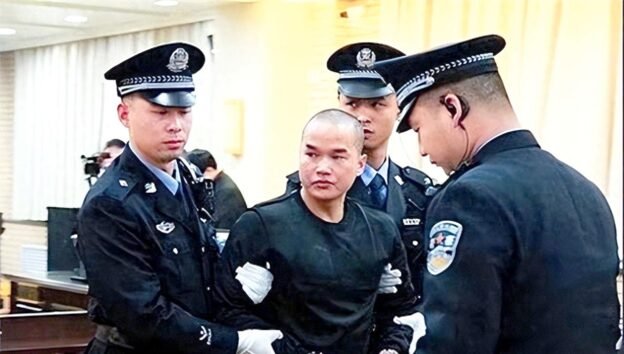
Zhang Koukou Case: China’s Lunar New Year Revenge Killing Explained (1996–2019)

I. Case Background: A Homicide from Twenty-Two Years Earlier

The core facts of the Zhang Koukou case cannot be understood apart from the neighborhood conflict that occurred in 1996. The criminal motive recognized by the court in Zhang Koukou’s trial points directly to this old case.

Zhang Koukou’s family and Wang Zixin’s family were neighbors in Wangping Village, Xinji Town, Nanzheng District, Hanzhong City, Shaanxi Province. On August 27, 1996, the two families clashed over a neighborhood dispute. During the conflict, Wang Zhengjun, the third son of Wang Zixin (then 17 years old), intentionally caused the death of Zhang Koukou’s mother, Wang Xiuping.

Regarding the cause of the 1996 conflict, CCTV reporters learned from local village cadres and villagers after the case that Wang Xiuping and Wang Zixin’s family had a dispute over a foundation boundary, which later escalated. According to media reports, Wang Xiuping displayed extreme behavior during the conflict, and Wang Zhengjun struck her temple with a wooden club, causing her death.

On December 5 of the same year, the former Nanzheng County People’s Court issued a judgment in the case. The court found Wang Zhengjun guilty of intentional injury, but given that he was under eighteen at … Read More

Wang Shujin Case

Wang Shujin Case: The “One Case, Two Perpetrators” Dilemma, Nie Shubin’s Wrongful Execution, and China’s Evidence Rules

I. Prologue: A Man “Competing to Be the Murderer”

In January 2005, Xingyang, Henan. A man of Hebei origin was captured by police on suspicion due to suspicious behavior. His name was Wang Shujin, a native of Guangping County, Hebei Province. During interrogation, he voluntarily confessed to multiple rape and murder cases, and one of them struck the investigators as unusual: he said that in the summer of 1994, in a cornfield in the western suburbs of Shijiazhuang, he had raped and killed a woman.

That case had already been “closed” ten years earlier. The man identified as the murderer was Nie Shubin, a twenty-year-old youth who had been executed in April 1995.

A “murderer” who had already been executed by firing squad, and a “true perpetrator” who was now confessing. Two clues that should never have intersected collided at this moment. Over the following sixteen years, Wang Shujin’s fate no longer depended solely on the crimes he himself had committed, but increasingly on a question he could not control: whether the court believed that he was the true perpetrator in the Nie Shubin case.

II. Wang Shujin’s Criminal Facts (The Part Already Established)

Before discussing the “… Read More

Nie Shubin Case

Nie Shubin Case: China’s Wrongful Execution and the “One Case, Two Perpetrators” Dilemma (1994–2016)

I. Prologue: Two Lives in a Cornfield

On August 5, 1994, a rape and murder occurred in a cornfield in Kongzhai Village in the western suburbs of Shijiazhuang. The victim, Ms. Kang, a worker at the Shijiazhuang Hydraulic Parts Factory, was in her thirties. Crime scene examination showed that the perpetrator raped Ms. Kang and then strangled her to death with a shirt.

A month later, on September 23, Nie Shubin, a young man from Xia Nie Zhuang Village, Luquan City, Shijiazhuang, was taken away by the police. He was twenty years old and worked at the factory run by the Luquan Comprehensive Vocational Technical School. The police determined that he was the perpetrator in that cornfield. On October 9, Nie Shubin was approved for arrest.

From arrest to execution by firing squad, only seven months passed.

Ten years later, in January 2005, the police in Xingyang, Henan, captured a man from Guangping, Hebei, named Wang Shujin. During interrogation, Wang Shujin voluntarily confessed to multiple rape and murder cases, and one of them made the investigators pause: he said that in the summer of 1994, in a cornfield in the western suburbs of Shijiazhuang, he had raped and killed … Read More

Zhao Zhihong Case

Zhao Zhihong Case Explained: Why China’s Supreme Court Rejected His Confession in the Huugjilt Murder

I. Prologue: The Capture of a “Smiling Killer”

On January 2, 2005, in Ulanqab City, Inner Mongolia. A woman surnamed Zhang was raped by a taxi driver while riding in a taxi. She pushed open the door and escaped when the vehicle slowed down, and memorized the license plate number: 蒙JY2230. Police investigation found that the owner of the vehicle was a woman surnamed Chen, but she could no longer be contacted. On the same day, a shepherd discovered a female corpse in a manure pit on the outskirts of the city. The hands and neck were bound with telephone wire, and she had been raped before death. The victim was precisely Chen. DNA identification confirmed that the two cases were committed by the same person.

Thereafter, within fifty days, two more female corpses were discovered on the outskirts of Ulanqab City, and the modus operandi was similar. The Ministry of Public Security listed the case as the No. 2 supervised homicide case of 2005, and an expert group rushed to Inner Mongolia. Based on the description of the sole survivor, a composite sketch was drawn: male, about 27 years old, 1.67 meters tall, thin face, curved eyebrows, triangular eyes.… Read More

Hugjiltu Case

Hugjiltu Case: How a Wrongful Execution Was Overturned When the “Real Killer” Confessed

I. Prologue: The Reporter Becomes the Murderer

On the evening of April 9, 1996, in Hohhot, the early-spring night was still cold. Eighteen-year-old Hugjiltu was a worker at the Hohhot Cigarette Factory. That evening he ate with his colleague Yan Feng; after they parted, he passed alone near the dormitory area of the Inner Mongolia No. 1 Woolen Textile Mill. He went into a public toilet on the west side of the single-story houses, then came out and called Yan Feng to return with him. Inside the women’s toilet, the two saw the body of a woman, naked from the waist down, and immediately ran to a nearby public-security kiosk to report it.

After reporting the crime, Hugjiltu was taken to the public security authorities. Within 48 hours, he was identified as the murderer. Feng Zhiming, deputy director of the Xincheng Branch of the Hohhot Public Security Bureau, and the case-handling personnel determined that Hugjiltu had indecently assaulted the victim in the women’s toilet and strangled her to death with his hands. The evidence regarded as “strong” at the time was O-type blood detected under the fingernail of Hugjiltu’s left thumb, matching the victim’s blood type.

From the report to … Read More

Wang Huaizhong Case

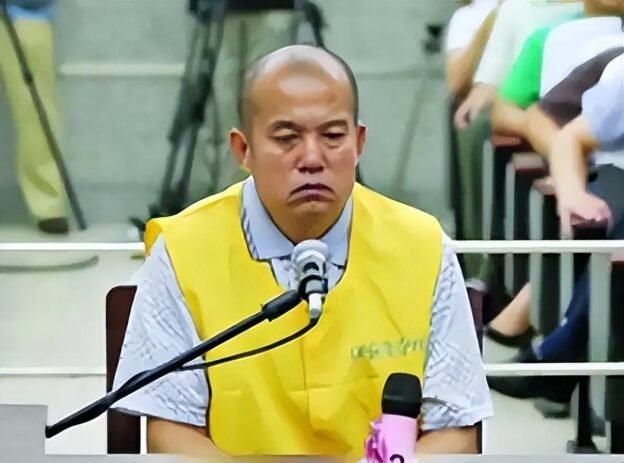
Wang Huaizhong Case: Anhui Vice Governor Executed for 5.17 Million Yuan in Bribes

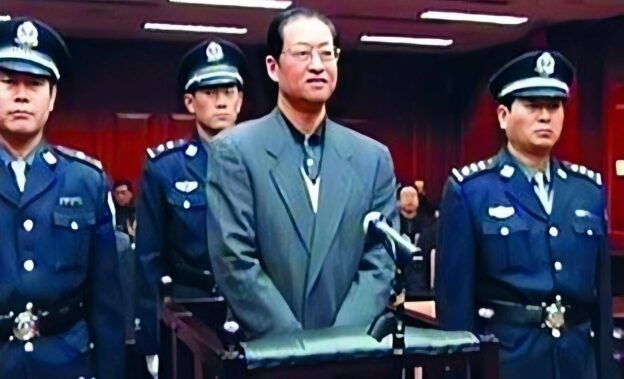
The Wang Huaizhong case was the third case of a provincial-ministerial-level corrupt senior official sentenced to death since the reform and opening up. Unlike Hu Changqing and Cheng Kejie, Wang Huaizhong’s trajectory of corruption bore a stronger “proactive” character: he did not passively accept “sugar-coated bullets,” but used his power to actively solicit bribes, and even after sensing an organizational investigation, attempted to use the huge sums he had solicited to “settle” the investigation. The following focuses on the course of the case and the key criminal facts.

I. Career Beginnings and the Expansion of Power

Wang Huaizhong was born in August 1946 in Bozhou, Anhui. His career began in Fuyang. In March 1993, he became deputy secretary of the Fuyang Prefectural Party Committee and commissioner of the administrative office; in October 1995, secretary of the Fuyang Prefectural Party Committee; in February 1996, secretary of the Fuyang Municipal Party Committee; and in October 1999, he was promoted to vice governor of Anhui Province. It took Wang Huaizhong more than six years to rise from the local level to the provincial-ministerial level, and locally he had a reputation for “being able to rise.” But details later disclosed showed that this … Read More

Luoyang Arcade Murder

Luoyang Arcade Murder (2000): Owner Killed 3 Schoolboys Over 2.5 Yuan, Burned Bodies

On February 27, 2000, a heartbreaking tragedy occurred in Luoyang, Henan. Three sixth-grade primary school students, after quietly leaving an arcade because they had overspent by 2.5 yuan, were tricked into returning by the arcade owner Jin Xiangwu and brutally killed. He then colluded with his elder brother to move the bodies and burn them to destroy the evidence. This bloody case, triggered by a trivial sum of money, exposed the perpetrator’s extreme cruelty and disregard for life, and caused a strong social shock locally.

I. Background: An Arcade and Three Boys

The crime scene was located in Luoyang City, and the arcade involved was operated by Jin Xiangwu. Jin Xiangwu was a local self-employed operator, and his elder brother Jin Xiangyu participated in helping destroy evidence after the incident. The three victims were all sixth-grade students of the First Primary School of Luoyang Bearing Factory: Duan Keke, Xue Yashan, and Du Ruofei. The three were of similar age, were close in daily life, and often visited the arcade together in their spare time. For primary school students at that time, arcade spending was not cheap, and the three had limited pocket money, which also planted the seeds for the … Read More

The Chang Sheng Case

China’s Largest Maritime Massacre: The 1998 “Chang Sheng” Case and the 23 Crew Members Lost at Sea

In November 1998, a 10,000-ton freighter quietly disappeared in the South China Sea. Aboard were 23 Chinese crew members, who, to the very end, did not know that they had boarded not an ordinary merchant shipping route, but the endpoint of a carefully planned maritime massacre. The “Chang Sheng” case was later classified as the largest maritime robbery and homicide case since the founding of New China. The cruelty of the case and the tortuous process of its investigation make it an unavoidable page in the history of China’s fight against maritime crime.

I. The Disappeared “Chang Sheng”

The “Chang Sheng” was a Panamanian-flagged bulk carrier with a total deadweight of 16,785 tons and an overall length of 146 meters. It belonged to Hong Kong Huibo Shipping Company, affiliated with Guangzhou Ocean Shipping Company. On November 13, 1998, it set sail from the Baosteel wharf in Shanghai, carrying coal slag bound for Malaysia. Aboard were 23 Chinese expatriate crew members.

Under normal circumstances, it should have arrived at its destination port within a few days. But the “Chang Sheng” did not appear at any port. It lost all contact in the waters near 22 degrees 20 minutes north latitude and … Read More

Cheng Kejie Case

Cheng Kejie Case: China’s Highest-Ranking Official Executed for Bribery (2000)

The Cheng Kejie case involved the largest bribery amount among senior leading officials since the founding of New China, and it remains the highest-ranking leading official ever subjected to capital punishment for the crime of accepting bribes. Unlike the Hu Changqing case, which was exposed by a “disappearance,” the clue in the Cheng Kejie case came from a single disclosure made during the review of a person involved in another case—two orders to sell white sugar at depressed prices led to a shocking case involving more than 40 million yuan in bribes.

I. The Sugar Incident: A Clue from a Single Disclosure

In January 1999, the Central Commission for Discipline Inspection (CCDI) was handling other cases in Guangxi. While reviewing a person involved in a case, this individual, hoping to earn merit, voluntarily disclosed a piece of information: during his tenure as Chairman of the Guangxi Zhuang Autonomous Region, Cheng Kejie had twice instructed him to demand 7,000 tons of sugar from the Guigang Sugar Factory at a depressed price for a Hong Kong businessman named Li Ping to resell, so as to earn a high price differential.

The content of this disclosure was not complicated, and the amount … Read More