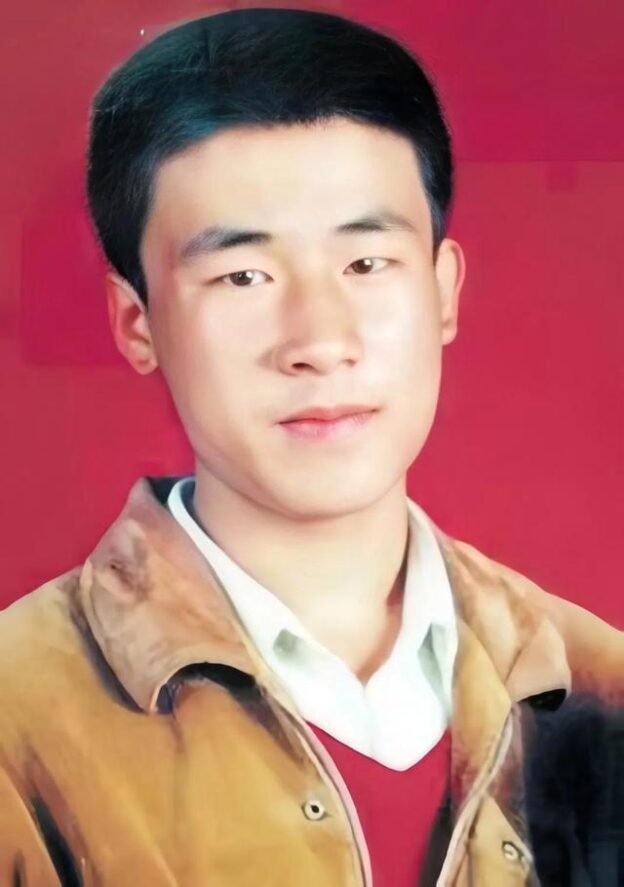
I. Prologue: The Reporter Becomes the Murderer
On the evening of April 9, 1996, in Hohhot, the early-spring night was still cold. Eighteen-year-old Hugjiltu was a worker at the Hohhot Cigarette Factory. That evening he ate with his colleague Yan Feng; after they parted, he passed alone near the dormitory area of the Inner Mongolia No. 1 Woolen Textile Mill. He went into a public toilet on the west side of the single-story houses, then came out and called Yan Feng to return with him. Inside the women’s toilet, the two saw the body of a woman, naked from the waist down, and immediately ran to a nearby public-security kiosk to report it.
After reporting the crime, Hugjiltu was taken to the public security authorities. Within 48 hours, he was identified as the murderer. Feng Zhiming, deputy director of the Xincheng Branch of the Hohhot Public Security Bureau, and the case-handling personnel determined that Hugjiltu had indecently assaulted the victim in the women’s toilet and strangled her to death with his hands. The evidence regarded as “strong” at the time was O-type blood detected under the fingernail of Hugjiltu’s left thumb, matching the victim’s blood type.
From the report to the execution of the death sentence, only 62 days passed.
II. The Original Judgment (Brief)
1996 coincided with the second nationwide “Strike Hard” campaign. The power to approve death sentences for serious violent crimes such as murder, robbery, and rape had been delegated from the Supreme People’s Court to the high people’s courts since 1983. Rapid sentencing by the first-instance court, documentary review by the second-instance court, and the merging of second instance with death-sentence review were the common handling rhythm for such cases at the time.
On May 17, 1996, the Hohhot Intermediate People’s Court issued Criminal Judgment (1996) Hu Xing Chu Zi No. 37, finding Hugjiltu guilty of intentional homicide and sentencing him to death with deprivation of political rights for life; and guilty of hooliganism and sentencing him to five years in prison, deciding to execute the death penalty with deprivation of political rights for life.
Hugjiltu appealed. On June 5, 1996, the Inner Mongolia Autonomous Region High People’s Court issued Criminal Ruling (1996) Nei Xing Zhong Zi No. 199, rejecting the appeal, upholding the original judgment, and approving the death sentence. On June 10 of the same year, Hugjiltu was executed by firing squad.
From the crime to the execution, 62 days. An eighteen-year-old who reported a crime became the “murderer” in the case.
III. The Exoneration Process
(1) The Appearance of the “Real Culprit” (2005)
The turning point in the Hugjiltu case came from the solving of another case.
On October 23, 2005, Zhao Zhihong, a suspect in a series of rape, robbery, and murder cases in Inner Mongolia, was captured. After being brought in, Zhao Zhihong voluntarily confessed that the first rape-murder he had committed in 1996 had taken place in a public toilet in Saihan District, Hohhot, near the cigarette factory. He accurately identified the crime scene, which had long since been demolished and rebuilt, and described the toilet’s orientation—”north-south orientation, women’s toilet on the south”—as well as its internal structure, the victim’s height and age, the method of strangulation, and the position in which the body was placed. His memory of these details was “clear and certain.”
Zhao Zhihong’s description of the case exceeded in accuracy what Hugjiltu had been able to provide in his confessions at the time. This development quickly caused a sensation.
But the appearance of the “real culprit” did not immediately translate into a retrial of the Hugjiltu case. From 2005 to 2014, Hugjiltu’s parents, Li Sanren and Shang Aiyun, began a long petition. For nine years, the Inner Mongolia High Court remained in a state of “under review.” Zhao Jianping, then executive vice president of the Inner Mongolia High Court, later explained that, on the one hand, the case involved two lives and was of great importance, requiring caution; on the other hand, both the victim and Hugjiltu were dead, and there were inherent deficiencies in the evidence, so the court needed a great deal of time to verify the original evidence.
(2) Initiation of Retrial (November 2014)
On November 19, 2014, the Inner Mongolia Autonomous Region High People’s Court issued Retrial Decision (2014) Nei Xing Jian Zi No. 00094, deciding to retry the case with a newly constituted collegial panel.
On the morning of November 20, Bao Batu, director of the case-filing division of the Inner Mongolia High Court, and others went to Li Sanren’s home to serve and read out the retrial decision. The same morning, the Inner Mongolia High Court held a press conference, announcing that after reviewing the petition in the Hugjiltu case, it considered that the conditions for retrial were met and decided to retry.
For Hugjiltu’s parents, from the execution of their son in 1996 to the appearance of the suspected “real culprit” in 2005, and then to the initiation of retrial in 2014, they had waited two nine-year spans. After learning that the retrial had been initiated, the words Shang Aiyun repeated most to family members and visiting reporters were “I believe in the rule of law” and “I thank the court.”
(3) The Retrial Judgment: Three Grounds and a Declaration of Innocence (December 15, 2014)
On December 15, 2014, the Inner Mongolia Autonomous Region High People’s Court issued a retrial judgment in the case of Hugjiltu for intentional homicide and hooliganism. The collegial panel reviewed all case files and related materials, heard the opinions of the petitioner, the defense, and the procuratorial authorities, and, after deliberation by the panel and discussion by the adjudication committee, issued the judgment: revoking the Inner Mongolia High Court’s Criminal Ruling (1996) Nei Xing Zhong Zi No. 199 and the Hohhot Intermediate Court’s Criminal Judgment (1996) Hu Xing Chu Zi No. 37, and declaring the original defendant Hugjiltu innocent.
The retrial judgment gave three main grounds for innocence:
First, the criminal method in the confession did not match the autopsy report. Hugjiltu confessed that he had covered the victim’s mouth with his right hand from behind, choked her neck with his left hand, and dragged her backward for two or three minutes at the same time, which did not match the autopsy finding of “extensive hemorrhage in the posterior mediastinum of the deceased”; he confessed that he had choked the victim’s neck with his left hand for more than ten seconds while she was draped over the partition wall with her head suspended, which did not match the conclusion that she “died of asphyxia caused by strangulation”; he also confessed that the victim was still breathing when he covered her mouth, which likewise contradicted the conclusion of death by asphyxia.
Second, the blood-type identification was not exclusionary. O-type blood was detected in the attached matter under the fingernail of Hugjiltu’s left thumb. Although it matched the victim’s blood type, blood-type identification is a kind of class evidence and is neither exclusionary nor unique; it could not prove that Hugjiltu had committed the criminal act.
Third, the incriminating confession was unstable and had many inconsistencies with other evidence. Hugjiltu’s statements about the victim’s height, hairstyle, clothing, and accent did not match other evidence, and there were instances of retraction. In addition, the hooliganism offense found in the original judgment was not proved by any evidence other than his confession.
The opinion of the Inner Mongolia Autonomous Region People’s Procuratorate in the retrial was likewise that the original judgment’s finding that Hugjiltu constituted intentional homicide and hooliganism was based on unclear facts and insufficient evidence, and that a judgment of innocence should be made through retrial proceedings.
On the day the retrial judgment was served, Zhao Jianping, executive vice president of the Inner Mongolia High Court, and the judges of the collegial panel went to the home of Li Sanren and Shang Aiyun and read out the judgment. Zhao Jianping expressed an apology on behalf of the court: “I express sincere apologies to you on behalf of the court, and I am deeply grieved by the wrongful conviction of Hugjiltu and his execution.”
Chen Weidong, a professor at the Renmin University of China Law School, commented at the time that initiating a retrial in a case where the death sentence had already been executed and changing the judgment to innocence was very rare, and that the case “fully embodies the spirit of the rule of law of the people’s courts in seeking truth from facts and in giving the benefit of the doubt.”
IV. The Outcome (Brief)
Retrial Judgment
On December 15, 2014, the Inner Mongolia Autonomous Region High People’s Court ruled: revoke the original first-instance judgment and second-instance ruling, and declare the original defendant Hugjiltu innocent.
State Compensation
On December 25, 2014, Li Sanren and Shang Aiyun applied to the Inner Mongolia High Court for state compensation. On December 30, the Inner Mongolia High Court made a state compensation decision, which was served on December 31.
The compensation decision provided for three items: death compensation and funeral expenses totaling 1,047,580 yuan; compensation for restriction of personal freedom for the 60 days Hugjiltu had been in custody before his death, 12,041.40 yuan; and compensation for mental distress of 1 million yuan. The total was 2,059,621.40 yuan.
In its explanation, the Inner Mongolia High Court noted that the penalty involved in the Hugjiltu case was the most severe, the death penalty, and that the mental distress caused to the relatives was “extremely serious”; therefore the amount of compensation for mental distress “exceeded 35 percent of the total of death compensation and compensation for restriction of personal freedom,” and was determined after comprehensively considering the particularity of the case and the functions of state compensation in remedying harm and soothing trauma. The case was later listed as a typical case commemorating the thirtieth anniversary of the promulgation of the State Compensation Law; the reason for inclusion stated that it “embodies the state’s firm determination of zero tolerance for criminal wrongful convictions and the correction of errors whenever they are found.”
Accountability
On January 31, 2016, the relevant departments of the Inner Mongolia Autonomous Region announced the results of accountability: 27 people responsible for the wrongful conviction of Hugjiltu received Party and administrative disciplinary sanctions. The sanctions covered the three links of public security, procuratorate, and court, from the then deputy captain of the criminal police team and the police officer of the pre-trial section of the Xincheng District Branch of the Hohhot Public Security Bureau, to the then director of the arrest approval division and the director of the public prosecution division of the Hohhot Municipal People’s Procuratorate, to the then chief of the First Criminal Division and assistant judge of the Inner Mongolia High Court, as well as the then president of the Hohhot Intermediate People’s Court and assistant judge of the criminal trial division.
Among them, Feng Zhiming, then deputy director of the Xincheng District Public Security Sub-bureau of the Hohhot Public Security Bureau, was “handled in a separate case in accordance with the law on suspicion of duty-related crimes.”