Category Archives: Serial Killers in China

Zhou Kehua Case

Zhou Kehua Case: The Complete Story of China’s Most Wanted Serial Killer (2004–2012)

I. Introduction: The End of a “Vicious Bandit”

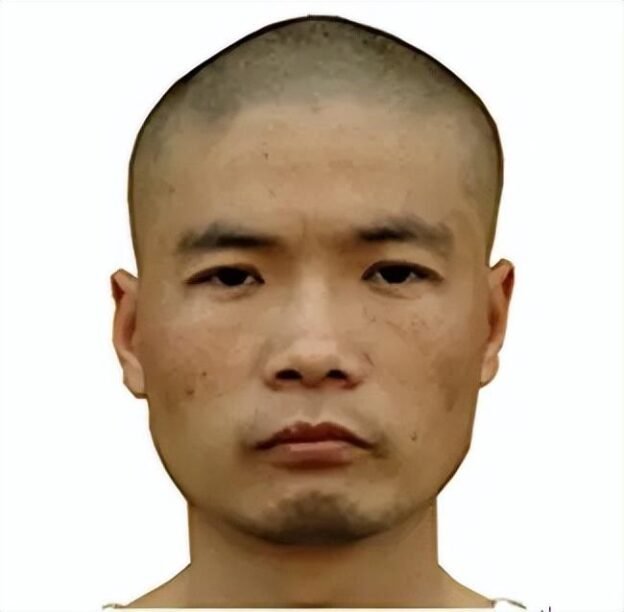
At 6:50 a.m. on August 14, 2012, several gunshots shattered the early morning silence in a narrow alley in Wosungou, Tongjiaqiao, Shapingba District, Chongqing. Zhou Kehua, a Grade-A wanted fugitive of the Ministry of Public Security, was shot dead after a close-range exchange of fire with two Chongqing police officers, falling in a street alley not far from his hometown of Jingkou Town. From April 22, 2004, when he first committed armed murder and robbery in Jiangbei District, Chongqing, to August 10, 2012, when he carried out his last bloody crime in Fengmingshan, Shapingba, this vicious bandit—officially reported as “responsible for 10 deaths”—had fled across Chongqing, Hunan, and Jiangsu over eight years, committing 10 armed robbery and murder cases, wounding 6 people, and robbing large amounts of property as well as a Type 81-1 automatic rifle.

His downfall ended eight years of panic spanning multiple cities along the Yangtze River basin and brought closure to this serial case, which had been listed as the “No. 1 Case” in the history of Chinese criminal investigation.

II. Early Trajectory and Pre-Criminal History (1970–2004)

Zhou Kehua was born on February 6, 1970, in Ertang Village, … Read More
Wang Shujin Case

Wang Shujin Case: The “One Case, Two Perpetrators” Dilemma, Nie Shubin’s Wrongful Execution, and China’s Evidence Rules

I. Prologue: A Man “Competing to Be the Murderer”

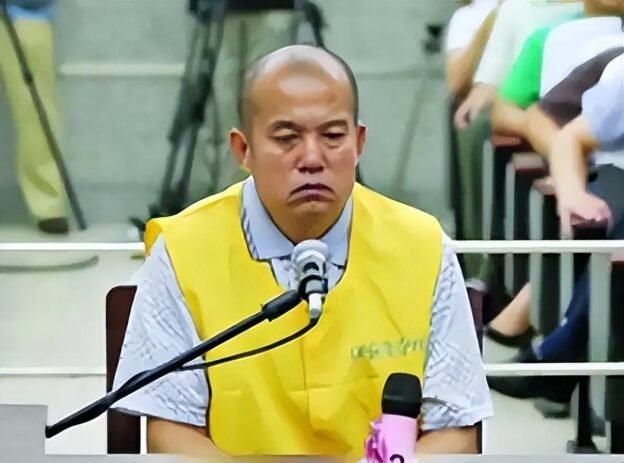
In January 2005, Xingyang, Henan. A man of Hebei origin was captured by police on suspicion due to suspicious behavior. His name was Wang Shujin, a native of Guangping County, Hebei Province. During interrogation, he voluntarily confessed to multiple rape and murder cases, and one of them struck the investigators as unusual: he said that in the summer of 1994, in a cornfield in the western suburbs of Shijiazhuang, he had raped and killed a woman.

That case had already been “closed” ten years earlier. The man identified as the murderer was Nie Shubin, a twenty-year-old youth who had been executed in April 1995.

A “murderer” who had already been executed by firing squad, and a “true perpetrator” who was now confessing. Two clues that should never have intersected collided at this moment. Over the following sixteen years, Wang Shujin’s fate no longer depended solely on the crimes he himself had committed, but increasingly on a question he could not control: whether the court believed that he was the true perpetrator in the Nie Shubin case.

II. Wang Shujin’s Criminal Facts (The Part Already Established)

Before discussing the “… Read More

Zhao Zhihong Case

Zhao Zhihong Case Explained: Why China’s Supreme Court Rejected His Confession in the Huugjilt Murder

I. Prologue: The Capture of a “Smiling Killer”

On January 2, 2005, in Ulanqab City, Inner Mongolia. A woman surnamed Zhang was raped by a taxi driver while riding in a taxi. She pushed open the door and escaped when the vehicle slowed down, and memorized the license plate number: 蒙JY2230. Police investigation found that the owner of the vehicle was a woman surnamed Chen, but she could no longer be contacted. On the same day, a shepherd discovered a female corpse in a manure pit on the outskirts of the city. The hands and neck were bound with telephone wire, and she had been raped before death. The victim was precisely Chen. DNA identification confirmed that the two cases were committed by the same person.

Thereafter, within fifty days, two more female corpses were discovered on the outskirts of Ulanqab City, and the modus operandi was similar. The Ministry of Public Security listed the case as the No. 2 supervised homicide case of 2005, and an expert group rushed to Inner Mongolia. Based on the description of the sole survivor, a composite sketch was drawn: male, about 27 years old, 1.67 meters tall, thin face, curved eyebrows, triangular eyes.… Read More