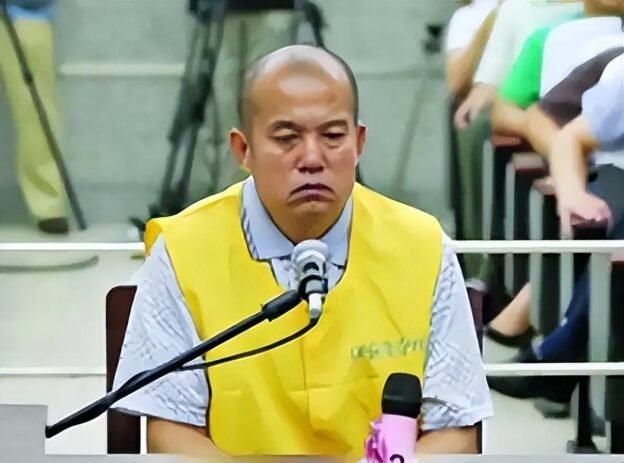
I. Prologue: A Man “Competing to Be the Murderer”
In January 2005, Xingyang, Henan. A man of Hebei origin was captured by police on suspicion due to suspicious behavior. His name was Wang Shujin, a native of Guangping County, Hebei Province. During interrogation, he voluntarily confessed to multiple rape and murder cases, and one of them struck the investigators as unusual: he said that in the summer of 1994, in a cornfield in the western suburbs of Shijiazhuang, he had raped and killed a woman.
That case had already been “closed” ten years earlier. The man identified as the murderer was Nie Shubin, a twenty-year-old youth who had been executed in April 1995.
A “murderer” who had already been executed by firing squad, and a “true perpetrator” who was now confessing. Two clues that should never have intersected collided at this moment. Over the following sixteen years, Wang Shujin’s fate no longer depended solely on the crimes he himself had committed, but increasingly on a question he could not control: whether the court believed that he was the true perpetrator in the Nie Shubin case.
II. Wang Shujin’s Criminal Facts (The Part Already Established)
Before discussing the “Nie Shubin case,” it is necessary first to see clearly what kind of criminal Wang Shujin himself was. According to the facts confirmed in the Supreme People’s Court’s death penalty review ruling, between 1993 and 1995 Wang Shujin raped and killed multiple women, with cruel methods and vile circumstances.
First case: November 29, 1993, between Nansilanggu Village and Botou Village, Guangping County
That morning, Wang Shujin abducted the victim, Zhang Moujia, who was passing by, to the south side of a nearby transformer house and raped her. Afterward, fearing that his crime would be exposed, he strangled her with his hands and a belt, causing her death, and buried the body.
Second case: November 21, 1994, on the road from Botou Village to Du Village, Guangping County
Wang Shujin intercepted the victim, Liu Moumou, who was passing by, strangled her unconscious, carried her to a nearby irrigation ditch, and raped her. He then caused her death by strangling her neck and stomping on her chest and abdomen, and buried the body.
Third case: Late in the seventh lunar month of 1995, southeast of Yanxiaozhai Village, Guangping County
Wang Shujin intercepted the victim, Jia Moumou, who was passing by on a bicycle, abducted her into a cornfield, and raped her. He then strangled her neck in an attempt to silence her, but fled the scene when Jia cried for help and the attempt failed.
Fourth case: Early in the eighth lunar month of 1995, east of Nansilanggu Village, Guangping County
After knocking down the victim, Zhang Mouyi, with his bicycle, Wang Shujin strangled her unconscious, carried her to the side of a wheat straw stack, and raped her. He then caused her death by strangling her neck and stomping on her chest and abdomen, and threw the body into a dry well in a nearby cornfield.
Four incidents: four women raped, three killed, one attempted killing. Wang Shujin had previously been sentenced for rape and continued committing crimes after release upon completion of his sentence. In its review ruling, the Supreme People’s Court described him as having “extremely deep subjective malice, extremely great personal danger and social harm, and extremely serious crimes.”
III. Capture and the “Unexpected Confession” (2005)
On January 17, 2005, Wang Shujin was captured by public security authorities in Xingyang, Henan. During interrogation, he not only confessed to the above four cases in Guangping County, but also confessed to a rape and murder case in a cornfield in the western suburbs of Shijiazhuang in 1994.
The specific circumstances of that case were: on August 5, 1994, the body of a woman was found in a cornfield in the western suburbs of Shijiazhuang; the victim, Ms. Kang, had been raped and then killed. After the incident, the then twenty-year-old Nie Shubin was captured by police. In March 1995, the Shijiazhuang Intermediate People’s Court sentenced Nie Shubin to death in the first instance; in April of the same year, the Hebei High People’s Court upheld the original judgment on appeal, and Nie Shubin was immediately executed.
When Wang Shujin was captured, Nie Shubin had been dead for nearly ten years. His confession reopened a case that had long been “settled.”
But problems existed from the very beginning. Wang Shujin’s confession regarding the Shijiazhuang western suburbs case contained several inconsistencies with the original crime scene examination and autopsy report. These inconsistencies later became the core basis on which the court refused to find that he was the true perpetrator in that case.
IV. The Long Trial: From First Instance to Death Penalty Review (2007–2020)
(I) First Instance: Three Cases, Death Penalty (March 2007)
On March 12, 2007, the Handan Intermediate People’s Court issued its first-instance judgment. The court established three incidents of intentional homicide and rape committed by Wang Shujin in Guangping County (involving Liu Moumou, Jia Moumou, and Zhang Moufang), sentenced him to death with deprivation of political rights for life, and sentenced him to fourteen years’ imprisonment for rape, deciding to execute the death penalty.
The Shijiazhuang western suburbs cornfield case (i.e., the Nie Shubin case) was neither prosecuted nor established.
(II) Appeal: A Rare Defendant “Competing to Be the Murderer”
Wang Shujin refused to accept the judgment and appealed. His grounds for appeal were extremely rare in criminal cases: he believed that his voluntary confession to the Shijiazhuang western suburbs case was a contribution to the state and society, constituted major meritorious service, and should result in a lighter punishment. In other words, he was asking the court to recognize that he was the true perpetrator in the Nie Shubin case.
This created a peculiar litigation structure: the defendant insisted he was guilty, while the prosecution insisted the case had nothing to do with him. The defense’s position was consistent with the defendant’s, and the roles of prosecution and defense were in a certain sense reversed.
(III) Second Instance: The Hebei High People’s Court’s Four Grounds for Rejection (September 2013)
On September 27, 2013, the Hebei Provincial High People’s Court pronounced its second-instance judgment, rejecting the appeal and upholding the original judgment. Regarding the Shijiazhuang western suburbs case, the Hebei High People’s Court gave specific reasons for not recognizing it:
First, the key detail of the floral shirt wrapped around the victim’s neck. The crime scene examination record and photographs showed that corn stalks were pressed on the victim’s neck, and after the corn stalks were removed, a floral shirt could be seen wrapped around the neck. However, in multiple confessions and in court, Wang Shujin never supplied this key, concealed detail.
Second, the confession regarding the method of killing was inconsistent with the autopsy report. The autopsy report stated that the skin of the victim’s chest and abdomen was intact, that no obvious wounds or fractures were found on the whole body, and that death was caused by suffocation. Wang Shujin, however, consistently confessed that after strangling the victim unconscious and raping her, he stomped on her chest with both feet and heard the “crack, crack” sound of rib fractures.
Third, the confession regarding the time of the crime contradicted witness testimony. Multiple witnesses proved that after finishing work at 5 p.m. on August 5, 1994, the victim was still taking a shower in the bathhouse and only afterward went missing. Wang Shujin confessed that the crime occurred at one or two o’clock in the afternoon, and that when he returned to the work site his coworkers were still taking their noon nap.
Fourth, the confession regarding the victim’s height did not match. The autopsy report recorded the victim’s height as 1.52 meters, while Wang Shujin confessed that the victim’s height was about the same as his own.
Based on these four points, the Hebei High People’s Court found that Wang Shujin’s confession regarding the Shijiazhuang western suburbs case was inconsistent with the evidence in the case file and did not constitute major meritorious service.
(IV) The Seven-Year Stagnation of Death Penalty Review (2013–2020)
After the second-instance judgment, Wang Shujin’s case entered the Supreme People’s Court’s death penalty review procedure. That wait lasted seven years.
During those seven years, the Nie Shubin case went through review in another jurisdiction (in December 2014, the Supreme People’s Court instructed the Shandong High People’s Court to review it), retrial (in June 2016, the Supreme People’s Court decided to take up the case), and finally a change to a not-guilty verdict (on December 2, 2016, the Second Circuit Court of the Supreme People’s Court declared Nie Shubin innocent).
Nie Shubin was vindicated. But whether Wang Shujin was the true perpetrator in the Nie Shubin case still had no judicial conclusion. Wang Shujin’s death penalty review therefore remained unresolved.
V. The Turning Point: The Zhang Moufen Case and Remand for Retrial (2020)
(I) DNA Identification of a Set of Remains
The opportunity for a retrial in Wang Shujin’s case did not come from the Nie Shubin case, but from another case he himself had committed.
In November 1993, Zhang Moufen, a woman from Nansilanggu Village, Guangping County, went missing. After his capture, Wang Shujin had confessed to killing Zhang Moufen and identified the burial site, and police had excavated a set of white bones at the scene. However, due to technical limitations at the time, the identity of the remains could not be confirmed, and the prosecution did not include the Zhang Moufen case in the charges at either first or second instance.
Zhang Moufen’s husband, Wang Zhefeng, searched everywhere during the twelve years after his wife’s disappearance. After the remains were discovered, he waited another fifteen years for an explanation. In 2019, he learned that Wang Shujin had not been found to have killed his wife, and he petitioned the Guangping County Public Security Bureau, requesting a new DNA identification. In May 2020, the DNA identification result confirmed that the white bones were Zhang Moufen’s.
(II) The Supreme People’s Court Remands for Retrial (November 2020)
On July 28, 2020, on the ground that “new evidence has appeared in the facts of the case,” the Supreme People’s Court ruled not to approve Wang Shujin’s death sentence and remanded the case to the Handan Intermediate People’s Court for retrial. On November 9, the ruling was officially announced.
(III) Retrial First Instance: The Zhang Moufen Case Is Established, the Shijiazhuang Western Suburbs Case Is Still Rejected (November 24, 2020)
On November 24, 2020, the Handan Intermediate People’s Court pronounced its retrial first-instance judgment. The court found that the Zhang Moufen case had been committed by Wang Shujin, sentenced him to death for intentional homicide and fifteen years’ imprisonment for rape, deciding to execute the death penalty. But as for the Shijiazhuang western suburbs case (the Ms. Kang case), the prosecution’s reasoning that the case was not committed by Wang Shujin still held, and the court did not establish it.
Zhang Moufen’s family received 37,887.5 yuan in incidental civil compensation. Wang Shujin’s side stated that it would continue to appeal, because the Shijiazhuang western suburbs case had still not been established.
(IV) Retrial Second Instance and Final Death Penalty Approval (December 2020–January 2021)
On December 21, 2020, the Hebei Provincial High People’s Court ruled on appeal to reject the appeal, uphold the original judgment, and report the case to the Supreme People’s Court for approval.
In its review, the Supreme People’s Court held that Wang Shujin had committed rape and intentional homicide four times, raped four women, killed three and attempted to kill one, and that his crimes were extremely serious. Although there was a circumstance of voluntary confession after being summoned on suspicion, this was not sufficient for a lighter punishment. In January 2021, the Supreme People’s Court approved the death penalty.
VI. Execution (February 2, 2021)
On February 2, 2021, the Handan Intermediate People’s Court executed Wang Shujin. Before the execution, the court notified his close relatives to meet him in accordance with law, but the close relatives refused to meet.
Wang Shujin is dead. To the end, he was never found by the court to be the true perpetrator in the Nie Shubin case. And Nie Shubin had been executed by firing squad back in 1995 for that case in the cornfield, and was declared innocent in 2016. Two men: one wrongly executed, one executed carrying the status of “an unrecognized true perpetrator.”
VII. Concluding Remarks: The Unclosed “One Case, Two Perpetrators”
Wang Shujin’s case has been legally concluded. But in public perception, the case in the cornfield in the western suburbs of Shijiazhuang has always carried an unresolved question mark.
The grounds on which the court rejected Wang Shujin as the true perpetrator in the Nie Shubin case were, at the technical level, specific: the floral shirt detail, the contradiction between the stomping of the chest and abdomen and the fractures in the autopsy, the conflict between the time of the crime and witness testimony, and the height discrepancy. These are the rules of evidence on which judicial findings rely. But from public intuition, between the credibility of the confession of a criminal who voluntarily confessed to a homicide that had never been investigated against him and accurately found the burial site during scene identification, and the court’s negative conclusion, there has always remained a gap that is difficult to fully bridge.
The real question left by Wang Shujin’s case may not be “whether he really was the true perpetrator in the Nie Shubin case“—that question already has a legal answer, although that answer has not convinced everyone—but rather: when a case contains contradictions in the evidence that cannot be excluded, how does the judicial system choose between “not wronging a good person” and “not letting a bad person go”? The Nie Shubin case has already proven that the cost of error in the former direction is life. The Wang Shujin case reminds people that judgment in the latter direction likewise needs to withstand the test of evidence.
Both men are dead. One died for a mistake, one died for his crimes. And the truth in that cornfield, with the deaths of both men, has been left forever in the summer of 1994.