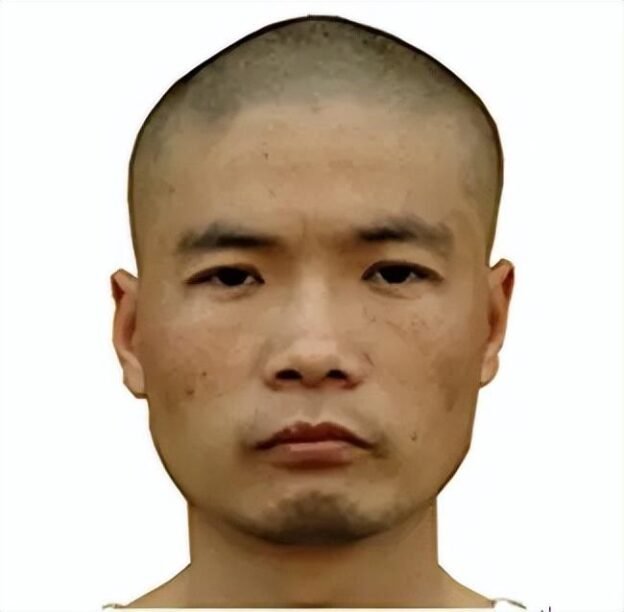
I. Introduction: The End of a “Vicious Bandit”
At 6:50 a.m. on August 14, 2012, several gunshots shattered the early morning silence in a narrow alley in Wosungou, Tongjiaqiao, Shapingba District, Chongqing. Zhou Kehua, a Grade-A wanted fugitive of the Ministry of Public Security, was shot dead after a close-range exchange of fire with two Chongqing police officers, falling in a street alley not far from his hometown of Jingkou Town. From April 22, 2004, when he first committed armed murder and robbery in Jiangbei District, Chongqing, to August 10, 2012, when he carried out his last bloody crime in Fengmingshan, Shapingba, this vicious bandit—officially reported as “responsible for 10 deaths”—had fled across Chongqing, Hunan, and Jiangsu over eight years, committing 10 armed robbery and murder cases, wounding 6 people, and robbing large amounts of property as well as a Type 81-1 automatic rifle.
His downfall ended eight years of panic spanning multiple cities along the Yangtze River basin and brought closure to this serial case, which had been listed as the “No. 1 Case” in the history of Chinese criminal investigation.
II. Early Trajectory and Pre-Criminal History (1970–2004)
Zhou Kehua was born on February 6, 1970, in Ertang Village, Jingkou Town, Shapingba District, Chongqing. Public information about his early life is relatively limited, but judging from the wilderness survival skills, counter-surveillance awareness, and proficiency in firearms he later displayed, he had come into contact with guns early in life.
According to reports by media outlets including The Beijing News, as early as September 1991, Zhou Kehua stole a hunting rifle in Shapingba, Chongqing. In 1997, he was caught by Wuhan police for illegally possessing a firearm; after refusing to surrender the gun and firing a shot into the air, he was sentenced to one year of re-education through labor. In 2005, he was sentenced to three years in prison for illegally transporting firearms. These periods of re-education through labor and imprisonment occurred after he had committed his first homicide, yet they did not set him on the path back.
It is worth noting that Zhou Kehua’s family life was equally fractured. According to his former mother-in-law’s account to the media after the case, Zhou Kehua had an eccentric personality and frequently committed domestic violence against his wife and children after marriage. This personality trait may have laid the groundwork for the cold, withdrawn, solitary style of his later crimes.
III. Eight Years of Bloodshed: A Comprehensive Review of the Serial Cases (2004–2012)
According to the briefing at the Chongqing police press conference on August 14, 2012, since 2004 Zhou Kehua had fled across Chongqing, Hunan, Jiangsu, and other places, committing 10 armed crimes, killing 10 people and wounding 6. The key information of each case is reconstructed below in chronological order.
(I) The Chongqing Phase: First Signs of Ferocity (2004–2005)
- April 22, 2004, Wuhuang Road Sub-branch of the Industrial and Commercial Bank of China, Jiangbei District, Chongqing
At around 12:00 noon that day, two female financial staff members of an enterprise walked out of the bank after withdrawing money. Zhou Kehua trailed them and shot each of them in the head on a busy street. One was hit in the temple and died on the spot; the other was injured. Zhou Kehua seized 70,000 yuan in cash and walked away toward the Hongqi Hegou roundabout, holding the gun in his hand the entire time without haste. This is the first documented armed robbery and murder in the Zhou Kehua serial cases. Police analysis suggested that there had been signs of prior stakeout, that the methods were cruel, and that it was highly likely the work of a transient offender.
- May 16, 2005, Hanyu Road, Shapingba District, Chongqing
At about 9:30 a.m. that day, Zhou Kehua trailed a couple who had withdrawn money near a bank and opened fire in front of a beef noodle restaurant. Both husband and wife were shot in the chest and died; a passerby was wounded in the leg. Zhou Kehua seized 170,000 yuan in cash and escaped through an underground passage. This crime occurred only a little over a year after the first case, with identical methods: targeting bank withdrawers, firing at vital areas at close range, and fleeing quickly.
After this, Zhou Kehua was sentenced to three years in prison for illegally transporting firearms, and his criminal trajectory entered a period of “silence” until he struck again in 2009.
(II) The Chongqing Sentinel Case: Escalation of Crime (March 2009)
- March 19, 2009, a military barracks of a unit stationed in Chongqing, Shiqiaopu, Chongqing High-tech Zone
At 7:42 p.m. that day, a masked assailant armed with a gun attacked a military sentry at the barracks, fatally shooting the sentry in the chest and seizing a Type 81-1 automatic rifle. After the case, Chongqing police once classified it within the counter-terrorism scope, setting up a special task force, but information about the suspect remained a mystery for a long time.
This case is of special significance in Zhou Kehua’s criminal career: it was not only the only attack in the serial cases targeting a military objective, but also the source from which Zhou Kehua obtained a military automatic rifle. It was not until after the “8·10” case in 2012 that police, through ballistic trace comparison, confirmed that the 9mm pistol used to kill the sentry and the imitation Type 54 pistol Zhou Kehua used in front of the bank belonged to the same person, thereby formally linking this case, which had been unresolved for three years, into the series.
(III) The Changsha Phase: Cross-Provincial Flight (2009–2011)
After committing the sentry case in Chongqing, Zhou Kehua’s area of operation extended south to Changsha, Hunan. From October 2009 to June 2011, Changsha became a high-incidence area for his serial crimes.
- October 14, 2009, Nanjiao Park, Changsha
At about 1:55 p.m. that day, in a secluded spot in Nanjiao Park in Changsha, a 56-year-old man was shot six times and died. The only 20 yuan on the victim was not taken. This case differed from Zhou Kehua’s previous robbery-motivated pattern: the victim was not a bank withdrawer, and the motive once sparked speculation. However, police later linked it into the serial case, indicating that ballistic traces pointed to the same firearm.
5. December 4, 2009, the intersection of Xinyao Road and Furong South Road, Tianxin District, Changsha
Zhou Kehua shot and killed a man surnamed Guo who had just withdrawn money from a bank, seizing 45,000 yuan in cash. The methods returned to his typical pattern: staking out the bank, trailing, close-range shooting, robbing and fleeing.
- October 25, 2010, East Second Ring Road, Yuhua District, Changsha
Xiao, manager of Hunan Huancheng Economic and Trade Company, was shot dead, and Zhou Kehua seized a laptop. The target shifted from ordinary withdrawers to business operators, but the core logic remained unchanged: selecting targets carrying valuables and using extreme violence to achieve the goal quickly.
- June 28, 2011, Heili Road, Guihuaping, Tianxin District, Changsha
A 48-year-old man surnamed Zhang driving a Lexus was shot and wounded by Zhou Kehua, injured in the head and waist but not killed. This is one of the few cases in the series in which a victim survived, and it also made it possible for police to obtain more clues later.
(IV) The Nanjing Phase: The Setback of Cross-Provincial Pursuit (January 2012)
- January 6, 2012, outside a bank in Xiaguan District, Nanjing
On the morning of that day, two men withdrew 200,000 yuan in cash from a bank. As one of them carried the money out the door and prepared to get into a car, Zhou Kehua rushed up to him, shot him in the head, and killed him on the spot; the 200,000 yuan was seized. This was Zhou Kehua’s first crime in Jiangsu and the single robbery with the highest amount.
After the case, the Nanjing police responded extremely quickly. The director of the Jiangsu Provincial Public Security Department and the director of the Nanjing Public Security Bureau arrived at the scene at the first opportunity, and the Nanjing Public Security Bureau immediately held a press conference, confirming that the case was linked to the serial armed robbery cases in Chongqing and Changsha. On January 7, the Nanjing police raised the reward from 100,000 yuan to 150,000 yuan and launched the “close the city gates” pursuit plan. All 13,000 police officers in the city were mobilized to set up checkpoints on major and secondary provincial roads, at railway stations, bus stations, and docks, and two police helicopters were dispatched for aerial patrols.
On January 9, the Ministry of Public Security held a coordination meeting on the “1·6” case in Nanjing and listed the serial armed robbery and murder cases in Jiangsu, Hunan, and Chongqing as the No. 1 Case. On January 12, the Nanjing police again raised the reward to 200,000 yuan, and the total reward offered by police in Hefei, Jiangxi, Hainan, Sichuan, and other places exceeded 3 million yuan. Yet despite such intensive pursuit, Zhou Kehua still escaped. How he broke through layer upon layer of checkpoints and escaped Nanjing remains one of the puzzling aspects of this serial case. This escape also allowed him to commit another crime in Chongqing seven months later.
(V) The Chongqing “8·10” Case: The Final Madness (August 2012)
- August 10, 2012, in front of the Bank of China savings office at Kangju Yuan, Fengmingshan, Shapingba District, Chongqing
This is the most publicly known case in the Zhou Kehua series and the direct trigger for his downfall.
At about 9:32 a.m. that day, Wang, a woman from Beibei District, and her brother-in-law Liao came to the entrance of the Bank of China savings office to collect a 100,000-yuan debt for carpentry work. The other party first paid 70,000 yuan and was about to enter the bank to withdraw the remaining 30,000 yuan. A minute later, Zhou Kehua quickly stepped forward and opened fire. Wang died on the spot, and Liao was shot in the neck, blood gushing out. Zhou Kehua grabbed Wang’s orange handbag and fled toward the Fengmingshan overpass. A security guard from the savings office chased him with a baton, and Zhou Kehua turned and fired two shots, hitting the guard in the arm. He then placed the bag on a flowerbed, took out 70,000 yuan in cash and a mobile phone, put them into a woven bag, and rode a motorcycle taxi toward Xinqiao.
- August 10, 2012, railway police officer Zhu Yanchao killed
At around 9:45 a.m., after getting off at the Xinqiao gas station, Zhou Kehua chose to flee along the railway toward Lishuwan. At that time, Zhu Yanchao, a police officer of the Chongqing Railway Public Security Division, was on a line patrol investigation near Wodang, Xinqiao Village, Qinjiagang Town, Shapingba District. The 29-year-old Zhu Yanchao noticed that Zhou Kehua looked suspicious and stepped forward to question him. The highly nervous Zhou Kehua immediately drew his gun and fired three shots at Zhu Yanchao’s head and chest, killing him. He then threw the mobile phone he had robbed from Wang onto the ground and quickly fled. This throw cut off the possibility of police tracking his location through the mobile phone signal, greatly increasing the difficulty of the subsequent manhunt.
Zhu Yanchao’s sacrifice escalated what had originally been a robbery and murder case into a vicious case of assaulting and killing police, and also brought the citywide manhunt in Chongqing to an unprecedented level.
IV. Dragnet: The Four-Day Manhunt and Final Shooting
(I) Citywide Deployment After the Case
On the afternoon of the day the “8·10” case occurred, Chongqing police identified Zhou Kehua through ballistic traces and DNA comparison. The Chongqing Public Security Bureau mobilized all police, together with the armed police and garrison troops stationed in Chongqing, to carry out deployment and pursuit under temperatures of 40 degrees Celsius. The Ministry of Public Security immediately issued a Grade-A wanted notice nationwide, and Vice Minister Zhang Xinfeng traveled specially to Chongqing to direct operations on the spot and dispatched expert groups to guide the investigation. Neighboring provinces such as Hunan, Sichuan, and Guizhou set up checkpoints layer by layer, forming a cross-provincial pursuit net.
The focus of the search was set in the Gele Mountain area of Chongqing. According to descriptions by militia defense team members participating in the search, special police and armed police were sent up the mountain by vehicle, equipped with bulletproof vests and police dogs, all fully armed, and after 7 p.m. even more police forces went up the mountain. The search operation lasted four consecutive days; police in Chongqing, Guizhou, and Sichuan all stopped leave, and the number of military and police personnel involved at one point approached 10,000. However, despite frequent clues, Zhou Kehua’s whereabouts remained a mystery for a time.
(II) Key Intelligence and the Final Stakeout
On August 13, a piece of crucial information was intercepted by Chongqing police: Zhou Kehua threatened that he would soon “do an even bigger case.” This intelligence pushed the police’s alert level to the highest point and also kept the staking-out officers highly vigilant on the morning of August 14.
At 6 a.m. on August 14, Wang Xiaoyu and Zhou Jin, police officers of the Microelectronics Park Public Security Police Station in Shapingba District, took over their shift and staked out near the postal savings office in Qinjiagang Town. At around 6:45, a man wearing sunglasses and carrying a backpack, walking while talking on the phone, attracted Zhou Jin’s attention. Although at the time he could not be 100 percent sure that the man was Zhou Kehua, Zhou Jin followed him based on professional instinct. The man suddenly accelerated after walking into an alley, then turned and walked toward the two police officers.
(III) The Gunfight at Three Meters
According to the two officers’ later recollections, after turning around, Zhou Kehua paused for a few seconds and suddenly drew his gun. Zhou Jin shouted “He has a gun” to alert Wang Xiaoyu while using a utility pole for cover. Wang Xiaoyu drew his gun and prepared to make an arrest despite being unable to find cover. At that point, the three formed a triangular position. Zhou Kehua fired first at Wang Xiaoyu; the bullet hit the ground 1 centimeter from his leg, and the ricochet wounded Wang Xiaoyu in the right calf.
Wang Xiaoyu and Zhou Jin immediately returned fire, each firing two shots at Zhou Kehua. Zhou Kehua fell to the ground after the officers fired three shots and then died. The entire exchange of fire took place at a distance of less than 3 meters. After Zhou Kehua fell, the officers found in his backpack one homemade pistol, three magazines, more than 30 rounds of ammunition, and more than 10,000 yuan in cash.
Forensic DNA identification confirmed that the person shot dead was indeed Zhou Kehua. That day, State Councilor and Minister of Public Security Meng Jianzhu signed an order awarding a citation to the Chongqing Public Security Bureau and granting it a collective first-class merit.
V. Aftermath: The Zhang Guiying Case and the Judicial Closure of the “8·10” Case
After Zhou Kehua was shot dead, his former girlfriend Zhang Guiying entered the judicial spotlight. Zhang Guiying, born in 1992, is from Yibin, Sichuan. She dropped out of school in the third year of junior high and once worked as a hostess in a beauty salon. Around April 2012, Zhou Kehua met her under the identity of “Liu Dong” and subsequently began a “kept” relationship. In July of the same year, the two went to Chongqing together.
According to the prosecution’s charges, Zhang Guiying was suspected of the crime of harboring and the crime of concealing and disguising criminal proceeds. After the “8·10” case occurred, Zhang Guiying repeatedly informed Zhou Kehua by phone and text message of the police investigation and pursuit situation she learned from news reports, helping him evade capture. In addition, knowing that the 60,000 yuan Zhou Kehua gave her was criminal proceeds, she still concealed it.
On January 15, 2013, the case was heard in the People’s Court of Shapingba District, Chongqing. Zhang Guiying completely retracted her confession in court, claiming that she did not know that “Liu Dong” was Zhou Kehua and did not believe her actions constituted a crime. She was even unable to identify Zhou Kehua from a photograph in court. However, after trial, the court held that the relevant evidence corroborated one another and was sufficient to establish Zhang Guiying’s criminal facts. On March 22, 2013, the court of first instance sentenced Zhang Guiying to five years in prison and a fine of 10,000 yuan on combined punishment for the crimes of harboring and concealing and disguising criminal proceeds. Zhang Guiying stated in court that she would not appeal.
VI. Conclusion: An Autopsy of a Sample
The reason the Zhou Kehua case is still repeatedly mentioned years after it occurred is not only the cruelty of his methods and the long time span of his crimes, but also because it exposed several weaknesses in the criminal investigation system at that time in areas such as cross-provincial case linkage, information sharing, and wilderness manhunts. From his first crime in 2004 to his final shooting in 2012, over eight years he repeatedly escaped under intensive police deployment, and even after the Nanjing “1·6” case he broke through a pursuit net woven with millions of yuan in rewards and tens of thousands of police officers. This in itself is a criminal investigation topic worthy of deep thought.
On the other hand, Zhou Kehua’s personal traits—his familiarity with firearms, his adaptation to the wilderness environment, his solitary criminal style, and his almost cold calmness—made him an opponent difficult to lock onto through conventional investigative means. What ultimately brought him down was not high-tech tracking equipment, but the professional vigilance of two grassroots police officers during an early morning stakeout and their decisive return fire at a distance of three meters in the face of a gun muzzle.
The gunshots on August 14, 2012, ended the life of a vicious bandit and also brought a belated full stop to the ten innocent victims and six injured. For the public safety system, however, what the Zhou Kehua case left behind is far more than a case file.