Luoyang Arcade Murder

Luoyang Arcade Murder (2000): Owner Killed 3 Schoolboys Over 2.5 Yuan, Burned Bodies

On February 27, 2000, a heartbreaking tragedy occurred in Luoyang, Henan. Three sixth-grade primary school students, after quietly leaving an arcade because they had overspent by 2.5 yuan, were tricked into returning by the arcade owner Jin Xiangwu and brutally killed. He then colluded with his elder brother to move the bodies and burn them to destroy the evidence. This bloody case, triggered by a trivial sum of money, exposed the perpetrator’s extreme cruelty and disregard for life, and caused a strong social shock locally.

I. Background: An Arcade and Three Boys

The crime scene was located in Luoyang City, and the arcade involved was operated by Jin Xiangwu. Jin Xiangwu was a local self-employed operator, and his elder brother Jin Xiangyu participated in helping destroy evidence after the incident. The three victims were all sixth-grade students of the First Primary School of Luoyang Bearing Factory: Duan Keke, Xue Yashan, and Du Ruofei. The three were of similar age, were close in daily life, and often visited the arcade together in their spare time. For primary school students at that time, arcade spending was not cheap, and the three had limited pocket money, which also planted the seeds for the … Read More
The Chang Sheng Case

China’s Largest Maritime Massacre: The 1998 “Chang Sheng” Case and the 23 Crew Members Lost at Sea

In November 1998, a 10,000-ton freighter quietly disappeared in the South China Sea. Aboard were 23 Chinese crew members, who, to the very end, did not know that they had boarded not an ordinary merchant shipping route, but the endpoint of a carefully planned maritime massacre. The “Chang Sheng” case was later classified as the largest maritime robbery and homicide case since the founding of New China. The cruelty of the case and the tortuous process of its investigation make it an unavoidable page in the history of China’s fight against maritime crime.

I. The Disappeared “Chang Sheng”

The “Chang Sheng” was a Panamanian-flagged bulk carrier with a total deadweight of 16,785 tons and an overall length of 146 meters. It belonged to Hong Kong Huibo Shipping Company, affiliated with Guangzhou Ocean Shipping Company. On November 13, 1998, it set sail from the Baosteel wharf in Shanghai, carrying coal slag bound for Malaysia. Aboard were 23 Chinese expatriate crew members.

Under normal circumstances, it should have arrived at its destination port within a few days. But the “Chang Sheng” did not appear at any port. It lost all contact in the waters near 22 degrees 20 minutes north latitude and … Read More

Cheng Kejie Case

Cheng Kejie Case: China’s Highest-Ranking Official Executed for Bribery (2000)

The Cheng Kejie case involved the largest bribery amount among senior leading officials since the founding of New China, and it remains the highest-ranking leading official ever subjected to capital punishment for the crime of accepting bribes. Unlike the Hu Changqing case, which was exposed by a “disappearance,” the clue in the Cheng Kejie case came from a single disclosure made during the review of a person involved in another case—two orders to sell white sugar at depressed prices led to a shocking case involving more than 40 million yuan in bribes.

I. The Sugar Incident: A Clue from a Single Disclosure

In January 1999, the Central Commission for Discipline Inspection (CCDI) was handling other cases in Guangxi. While reviewing a person involved in a case, this individual, hoping to earn merit, voluntarily disclosed a piece of information: during his tenure as Chairman of the Guangxi Zhuang Autonomous Region, Cheng Kejie had twice instructed him to demand 7,000 tons of sugar from the Guigang Sugar Factory at a depressed price for a Hong Kong businessman named Li Ping to resell, so as to earn a high price differential.

The content of this disclosure was not complicated, and the amount … Read More

Hu Changqing Case

Hu Changqing Case: China’s First Vice-Provincial Official Executed for Corruption (2000)

The Hu Changqing case was the first case since the beginning of reform and opening up in which a vice-provincial-level senior official was sentenced to death for economic crimes. Unlike most corruption cases, which are discovered through whistleblowing or audits, Hu Changqing’s downfall stemmed from an almost absurd “disappearance”—a vice governor who left his delegation without authorization during an official event, forged his identity, and vanished, thereby triggering alarm at the highest levels and subsequently unraveling a shocking network of power-for-money deals.

I. The Kunming “Disappearance”: A Vice Governor Becomes “Chen Fengqi”

In August 1999, the World Horticultural Exposition was held in Kunming. August 6 was Jiangxi Pavilion Day, and Hu Changqing, then Vice Governor of Jiangxi Province, led a delegation to preside over the pavilion’s opening ceremony. By this time, Hu Changqing had actually already received orders to be transferred back to Beijing, but he repeatedly refused to hand over his work, ultimately citing the excuse that “the opening of the Jiangxi Pavilion at the Expo was originally part of my portfolio” and that he wanted to “bring things to a close” in Jiangxi.

On August 6, Hu Changqing, wearing a light-colored suit and a red tie, presided over … Read More

The Nanping 3·23 Case of Zheng Minsheng

Nanping Primary School Stabbing (2010): Zheng Minsheng Case, 8 Dead, 5 Injured — Full Account

On March 23, 2010, a case that shocked the entire nation occurred at the gate of Nanping Experimental Primary School in Fujian. Within the few short minutes during which students waited to enter the school in the early morning, a middle-aged man stabbed thirteen primary school students in succession with a knife, killing eight and seriously injuring five. The perpetrator, Zheng Minsheng, then forty-two years old, had formerly served as a doctor at a community health service station. What made this case draw far more attention than an ordinary criminal case at the time was not only the sheer severity of the casualties, but also the perpetrator’s choice of schoolchildren—those least capable of self-defense—as targets of his revenge, and the premeditation and coldness revealed in the course of the crime.

I. The Perpetrator

Zheng Minsheng was a native of Nanping, Fujian. Before the case, he had been a doctor at the Mazhan Community Health Service Station in Nanping, and he resigned in June 2009. In the descriptions of those around him, Zheng was introverted and did not get along well with colleagues or family. Colleagues testified that he “always felt others were out to harm him and liked to misjudge … Read More

Xiamen BRT Bus Arson 2013

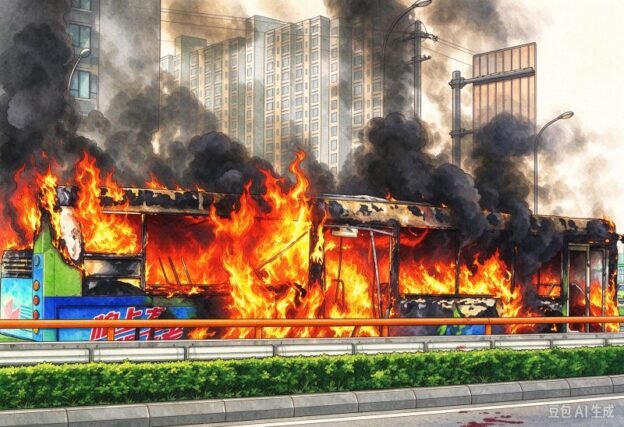
Xiamen BRT Bus Arson (2013): 47 Killed in Premeditated Fire Attack

On the evening of June 7, 2013, at 18:22, on a BRT bus rapid transit lane in Xiamen, Fujian Province, a bus suddenly burst into flames. In just over ten minutes, the fire engulfed the entire bus, causing a tragic toll of 47 deaths and 34 injuries. Among the 47 dead were 8 students who were due to sit the college entrance examination the next day.

Xiamen BRT Line 1 runs from Jimei District outside Xiamen Island to the First Pier inside the island. At the time of the accident, it was the evening rush hour, and the bus, with a capacity of 95, was carrying 89 people.

Just 300 meters after the bus passed Jinshan Station, the carriage was shrouded in a sudden burst of white smoke, followed by a rapidly spreading flame. A man in a white shirt was quickly engulfed by the fire.

People on the bus began shouting for the driver to stop. The driver sensed something was wrong and quickly opened the doors. Passengers began evacuating, and some chose to escape by jumping out of the windows.

One passenger who successfully escaped recalled that at Jinshan Station he had smelled a very obvious gasoline odor, … Read More

Suzhou Doctor Qiu Xiaoqiang Killed Wife Gu Su

Suzhou Doctor Qiu Xiaoqiang Killed Wife Gu Su with Ketamine on Mid-Autumn Festival 2003 — Autopsy, Murder Trial and Death Sentence

On September 11, 2003, it was the traditional Chinese Mid-Autumn Festival, a day for families to reunite, admire the moon, and eat mooncakes. But for Professor Gu’s family in Suzhou, this day marked the beginning of their nightmare.

At 9:55 that evening, Professor Gu, who was about to go to bed, received a call from his eldest son-in-law Qiu Xiaoqiang, saying that he was taking his wife Gu Su to the hospital and asking Professor Gu to come quickly.

Professor Gu’s drowsiness immediately vanished. Gu Su was his eldest daughter. A month earlier, she had suddenly developed heart disease, and a week before that, she had been rushed to the hospital for emergency treatment once.

On September 4, a week earlier, when he and his wife hurried to the hospital, their daughter Gu Su was being taken into the emergency room.

At that time, Gu Su’s face was pale, and she was clutching her chest. When she saw her father Professor Gu, she tightly grasped his hand and said with all her strength, “Dad, save me quickly!”

Qiu Xiaoqiang was Professor Gu’s favored student and also his eldest son-in-law. Looking at Qiu Xiaoqiang waiting anxiously outside the emergency room, Professor … Read More

Shenzhen Family Murder 2013 1

Shenzhen Man Who Raped and Killed Daughter, Wife and Son Sentenced to Death: Full Case Timeline

On the morning of February 19, 2013, at 10 a.m., police in Bao’an District, Shenzhen, received a report. The caller, Mr. Liang, had been unable to contact his sister Ms. Liang, his nephew, and his niece for several consecutive days. Worried that something had happened to the three of them, he called the police for help.

According to Mr. Liang, his sister Ms. Liang, shortly after the New Year holiday, took her son Yang Jun and daughter Yang Ying from Dongguan to Shenzhen to reunite with her husband Yang Fei. After his sister arrived in Shenzhen, Mr. Liang wanted to check on them out of concern, but for several days in a row he could not reach them. Mr. Liang also did not know where his brother-in-law Yang Fei lived, so he could not go looking for them himself.

After receiving the report, the police quickly retrieved Yang Fei’s temporary residence information in Shenzhen from their computer system and located his residence. After knocking on the door for a long time with no response, the police brought the landlord of the rental apartment and successfully opened the door. The police did not find anything unusual inside the apartment, and Yang … Read More

Shajian Village Bombing

Shajian Village Bombing: The 2000 Wedding Massacre That Killed 39 in China

Shajian Village, located in Shuozhou City, Shanxi Province, about 10 kilometers north of Shuozhou City, is a medium-sized village with more than 700 people. Most of the villagers make a living by farming and working in nearby coal mines, and it is a well-known wealthy village in the area.

The rhythm of life for the villagers of Shajian Village follows the farming seasons and the shifts at the mines. In such a closed North China village where the villagers are all related to one another by kinship, interpersonal relationships are extremely tight, and a family’s life is almost completely exposed to the scrutiny of an acquaintance society, with almost no personal privacy to speak of.

Liu Zhanjin, a 34-year-old villager at the time, lived in this environment where there was almost no space for personal privacy. Liu Zhanjin was withdrawn and introverted by nature, almost never taking the initiative to communicate with others, and was a typical marginal figure in the village.

In his early years, Liu Zhanjin married his wife through the traditional rural matchmaking method. The two had no emotional foundation before marriage, and conflicts soon emerged after marriage.

Liu Zhanjin’s wife maintained ambiguous relationships with multiple men … Read More

1997 Changzhou Grocery Store Double Murder Solved After 14 Years

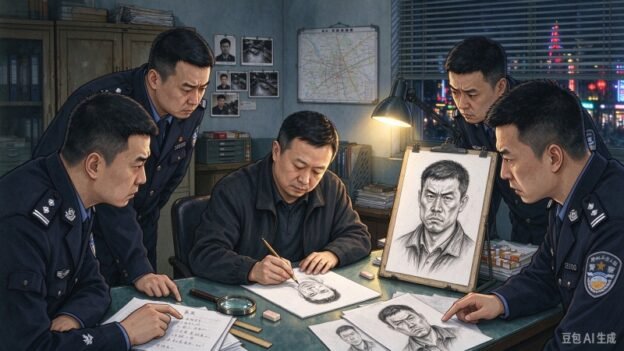
1997 Changzhou Grocery Store Double Murder Solved After 14 Years: How Forensic Sketch and Offender Database Caught the Killer

On the morning of October 21, 1997, police in Changzhou City, Jiangsu Province, received a report from employees of Yimin Grocery Store that their two night-shift workers had been killed the previous night.

Upon receiving the report, police immediately rushed to the scene. The scene was extremely bloody. The two victims had been struck on the head with a blunt instrument while asleep and killed. A check by store staff revealed that a large quantity of cigarettes had been stolen.

Of the two deceased, one was Zhu Jumei, a retired female employee who had come to the store for the night shift. The other was Xue Chunfeng, a newly hired 20-year-old female sales clerk who lived at the store at night because her home was relatively far from where she worked.

Through crime scene investigation and taking into account the stolen cigarettes from the store, police quickly determined the nature of the case: it was a homicide that had escalated from theft to robbery and murder.

Based on the crime scene investigation and interviews conducted in the surrounding area, police developed a preliminary profile of the perpetrator: a young adult male, approximately 25 years old, financially strapped and in great … Read More