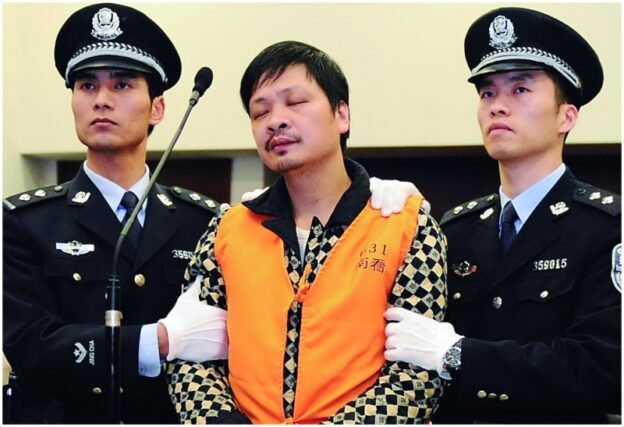
On March 23, 2010, a case that shocked the entire nation occurred at the gate of Nanping Experimental Primary School in Fujian. Within the few short minutes during which students waited to enter the school in the early morning, a middle-aged man stabbed thirteen primary school students in succession with a knife, killing eight and seriously injuring five. The perpetrator, Zheng Minsheng, then forty-two years old, had formerly served as a doctor at a community health service station. What made this case draw far more attention than an ordinary criminal case at the time was not only the sheer severity of the casualties, but also the perpetrator’s choice of schoolchildren—those least capable of self-defense—as targets of his revenge, and the premeditation and coldness revealed in the course of the crime.
I. The Perpetrator
Zheng Minsheng was a native of Nanping, Fujian. Before the case, he had been a doctor at the Mazhan Community Health Service Station in Nanping, and he resigned in June 2009. In the descriptions of those around him, Zheng was introverted and did not get along well with colleagues or family. Colleagues testified that he “always felt others were out to harm him and liked to misjudge colleagues”; relatives also reported that he “did not like to talk, often quarreled with family, and disliked being managed by his family.” After resigning, Zheng’s life did not go smoothly. He once helped others wash cars and sold watermelons, and his financial situation was tight—a sharp contrast to his former identity as a doctor.
In matters of love, Zheng suffered repeated setbacks. He claimed to have dated five women, all without result. Among them, he was especially persistent about Ye, the daughter of a restaurant owner near the health station, claiming to have pursued her for ten years. However, testimony obtained by the prosecution showed that Ye and Zheng “had no romantic relationship; the two had not even eaten a single meal together—it was merely Zheng unilaterally calling her.” Of the five so-called romantic partners, only one had ever established a genuine boyfriend-girlfriend relationship with Zheng. There was a significant discrepancy between Zheng’s perception and objective fact. At trial, he insisted that Ye, having been rejected, bore a grudge and spread remarks damaging to his reputation, and even fantasized that Ye had “joined forces with the police to persecute” him and planned to have him arrested on March 23. This persecution-delusion-style thinking became the psychological groundwork for his subsequent extreme behavior.
In addition, there was an economic dispute between Zheng and his former employer. According to his account, the health station raised funds to buy a building for rent, and employees could buy shares. At the time, because he had no money, he transferred his shares to the station chief, and later, when he wanted to buy them back, he was refused. Under the accumulation of multiple frustrations, Zheng gradually developed thoughts of pessimism, world-weariness, and vengeful venting. According to his account after arrest, the day before the crime he told a female neighbor that “living is meaningless,” and the neighbor responded that “you can’t just die like that—it’s too cheap; you should do something to make people look at you with new eyes.” Police were unable to confirm the authenticity of this episode in subsequent investigation, but Zheng’s own world-weary and vengeful mentality was corroborated by numerous statements and witness testimony.
II. Premeditation and Preparation
Zheng’s crime was not improvised. From details disclosed in subsequent investigation and trial, he had formed a clear criminal plan several days before the crime. He stated: “These past few days, I kept thinking about how to kill people, and I decided to go to Nanping Experimental Primary School to kill students.” Choosing a primary school as the target was the result of rational calculation: he knew that attacking adult men would be “difficult to succeed,” whereas primary school students had no ability to resist, making it easy to cause maximum casualties in a short time. He even set a specific numerical goal—originally planning to kill thirty people, at minimum ten.
On the eve of the crime and in the early morning of that day, Zheng’s actions displayed a clear sense of procedure. At about 6:20 a.m. on March 23, he took a knife about thirty centimeters long from the kitchen at home, held the handle with his left hand, and hid the blade inside his coat sleeve, carrying the weapon out of the house in this manner. After leaving home, he first went running, then ate a bowl of mixed noodles for breakfast, then took a motorcycle taxi to the vicinity of the school and walked to the gate of the experimental primary school. When he arrived, it was still early and few students were at the gate, so he went to the nearby sports ground and pretended to watch people play badminton, then went around to the track and pretended to run, to pass the time and observe the environment. While waiting, he even asked a passing primary school student when the school opened, to confirm the timing for action.
This series of behaviors—hiding the knife, eating breakfast, pretending to exercise, asking about the opening time—indicated that Zheng maintained considerable calm and orderliness before the crime, and that his mental state was sufficient to support planned, step-by-step action. Physical and chemical examination reports also confirmed that he was not drunk or under the influence of drugs at the time of the crime.
III. The Course of the Crime
At about 7:20 a.m., dozens of students waiting to enter the school had gathered at the gate of the experimental primary school. The school stipulated that the gate would open at 7:30, and the children who arrived early stood in twos and threes on the open ground outside the gate, some chatting, some eating breakfast, with no adult organizing order or setting up protection. Zheng mixed into the crowd and stood behind Chen, a third-grade girl, on the cement road on the south side of the open ground at the school gate.
Between 7:25 and 7:26, Zheng decided to act. The motive he later stated was extremely blunt: “If I don’t kill now, the school gate will open.” He grabbed Chen’s chin with his left hand and lifted it up, and with his right hand holding the knife, he reached around from behind to the front of her neck and cut hard. Chen’s neck blood vessels were severed, and she fell to the ground dead on the spot. This was the first victim, and also the only complete implementation of the “throat-slitting” method in Zheng’s plan. After that, the surrounding students realized something had happened and began to flee in all directions. Zheng found that he could no longer control targets one by one to cut their throats, so he switched to stabbing. Using his medical knowledge, he specifically chose vital areas such as the chest and abdomen, and every stab was aimed at being fatal. He stated: “I studied medicine; I know which parts of the body are most fatal when stabbed. I stabbed at the heart area. Time did not allow otherwise—I had to hurry and kill a few more. I would stab once and then grab the next one.”
Investigators later saw even more cruel details from surveillance video: after thrusting the knife into some children’s chest cavities, Zheng repeatedly twisted the handle, causing more bleeding points and extremely heavy blood loss, creating great difficulty for subsequent rescue. Because he used excessive force in stabbing, Zheng’s own right hand web was also cut by the knife, and the weapon left at the scene tested positive for both the blood of the victimized students and his own blood.
The attack lasted an extremely short time. According to surveillance records, from the first stab to Zheng being subdued, the entire process was only about fifty-five seconds. In less than a minute, thirteen primary school students were attacked in succession. The first to react and step forward was citizen Ying Changyu, who was seeing his daughter to school. He had just dropped his daughter off at the school gate and was buying breakfast at a steamed bun shop more than ten meters away. Hearing the children’s screams, he grabbed a motorcycle helmet and rushed forward. Holding the helmet, he confronted Zheng, using his body to block the perpetrator’s route toward more children while shouting loudly. Ying later recalled that Zheng “looked wherever, and I blocked wherever,” and the two were only about two meters apart, with Zheng constantly swinging the knife at him. Under Ying’s obstruction, some children were able to escape from behind him. Subsequently, Gan Guiping, deputy director of the academic affairs office of the experimental primary school, arrived with a broom, and together with other citizens surrounded Zheng. Seeing the situation turn against him, Zheng threw down the knife, and the crowd rushed forward and pinned him to the ground. When subdued, Zheng was still shouting: “I still want to kill three or four more!” Public security personnel arrived quickly after receiving the alarm and took him away.
IV. Casualties and Medical Treatment
Among the thirteen victimized students, eight died on the spot or after being sent to hospital due to massive hemorrhage caused by sharp instruments cutting or piercing important blood vessels or organs. The five seriously injured were rushed to the ICU wards of Nanping First Hospital and Nanping People’s Hospital. The injuries were extremely severe: one girl’s right lung lobe was pierced, causing pneumothorax and subcutaneous emphysema, and she was once placed on a ventilator and closed drainage; one student’s liver was damaged; another, the most seriously injured, suffered two cardiac arrests and was admitted to and discharged from the ICU twice for surgery, and doctors feared that even if rescue succeeded, the patient might become vegetative. Another girl grabbed the blade with both hands when attacked, so her hands were severely cut, but her torso was not stabbed, making her the fastest to recover among the injured.
On the day of the case, Nanping City established an incident handling leading group, with six working groups including the injured rescue group, aftermath handling group, and comfort and stabilization group. Critical care medicine experts from Peking Union Medical College Hospital and thoracic surgery experts from Beijing Chaoyang Hospital dispatched by the Ministry of Health arrived in Nanping the next day to participate in consultations, and the Fujian Provincial Health Department also dispatched three batches of medical expert groups in succession. On March 25, four of the five injured were already conscious and their conditions relatively stable. But psychological trauma was far harder to heal than physical trauma. The mother of one seriously injured girl stated during the trial that after the injury, the child “never again took the initiative to call me Mom,” becoming silent and withdrawn and unwilling to communicate with those closest to her.
The remains of the deceased students were cremated on March 27, and the local government, through the aftermath handling group, distributed social assistance funds to each bereaved family.
V. Scene Identification and Statements
At 3:30 a.m. on March 25, Zheng was taken to the scene of the crime for identification. For security reasons, the operation was conducted under highly secret conditions, with lighting provided by a power company generator vehicle on site and public security personnel videotaping and photographing throughout. The identification began at the specific location where Zheng stabbed the first child and lasted about thirty minutes. Investigators later revealed that during the identification, Zheng “had clear memory and accurate narration, and his reconstruction of the course of the crime was almost completely consistent with the surveillance video.” This calmness and precision formed an unsettling contrast with the madness of the case itself.
In several interrogations, Zheng never showed apology or remorse. He attributed the cause of the crime to others, especially Ye. He claimed that Ye “had mental problems,” that her family “felt humiliated” and decided to frame him, and planned to arrest him on March 23, so he “wanted to create a sensational incident to expose those who were framing him.” This logic seemed absurd to ordinary people, but within Zheng’s cognitive system it formed a self-contained loop. Evidence presented by the prosecution showed that no intimate relationship as he claimed existed between Ye and Zheng, and Ye herself explicitly denied it in her testimony. The court ultimately found that Zheng was “suspicious by nature, inferior and lacking self-confidence,” and that his motive for the crime stemmed from pessimism, world-weariness, and vengeful venting after romantic setbacks and deteriorating interpersonal relationships.
VI. Trial and Execution
On April 8, 2010, the Nanping Intermediate People’s Court held a public hearing of the case. The court appointed a defense lawyer for Zheng. During the trial, the prosecutor presented evidence including screenshots of on-site surveillance, and the families of the victimized students wept aloud in the gallery. Zheng refused to answer directly about the course of the crime, insisting on first explaining the “cause,” and loudly rebutted the characterization of “narrow-minded” in the indictment. The court found after trial that Zheng’s criminal motive was clear and his intent resolute; he stabbed and cut innocent primary school students in vital areas, causing eight deaths and five serious injuries; the cruelty of the means, the vileness of the circumstances, and the severity of the consequences were outrageous, and his conduct constituted the crime of intentional homicide. On the morning of the same day, the court sentenced Zheng Minsheng to death in the first instance, deprived of political rights for life, and ordered him to compensate each bereaved family 400,000 to 410,000 yuan and each injured family 10,000 to 30,000 yuan. Zheng stated in court that he would appeal.
On April 20, the Fujian Provincial Higher People’s Court held a second-instance hearing and ruled on the spot to reject the appeal and uphold the original judgment, and reported it to the Supreme People’s Court for approval. The Supreme People’s Court, after review, confirmed the facts and evidence of the original trial and lawfully approved the death penalty. On the morning of April 28, the Nanping Intermediate People’s Court publicly pronounced the judgment on Zheng Minsheng and then had him taken to the execution ground for shooting, with the execution carried out at 9:06 a.m. that day.