Wang Jiafei was an 18-year-old girl living in Yingge Village, Maozu Township, Qiaojia County, Yunnan Province—a remote area surrounded by mountains, with poor transportation and a backward economy. Her father was Wang Tingli, her mother was Chen Lijin, and she had an older brother, Wang Jiachong, and a 3-year-old younger brother, Wang Jiahong. Her dream was to leave the mountains as soon as possible and live in Kunming, the provincial capital.
Villager Li Shunqiang had three sons, and Li Changkui was his youngest. Li Changkui and Wang Jiafei had known each other since childhood, and the two had once worked together in Kunming. During that time, Li Changkui developed feelings for Wang Jiafei and pursued her persistently. The two had lived together for a period.
Li Shunqiang said that when Li Changkui and Wang Jiafei were working together in Kunming, they liked each other and established a romantic relationship.
However, Wang Jiafei’s family did not agree with Li Shunqiang’s claim that the two were in a romantic relationship. They all said that it was merely Li Changkui’s one-sided wish.
Wang Jiafei’s father, Wang Tingli, said he strongly disliked Li Changkui. He believed that Li Changkui was already thirty years old, too old, and that Li Changkui was still a farmer and migrant worker with limited income. He did not want his daughter to suffer with Li Changkui. Her mother, Chen Lijin, said that her daughter actually did not like Li Changkui and had never said she wanted to marry him.
Wang Jiafei’s older brother, Wang Jiachong, said that Li Changkui did indeed like his sister, so the Li family had twice sent matchmakers to the Wang family to propose marriage, but each time they were rejected by his parents.
After the Li family’s two consecutive marriage proposals were rejected by the Wang family, and according to fellow workers who had worked with Li Changkui and Wang Jiafei, because Wang Jiafei’s parents opposed the marriage, Wang Jiafei had an abortion of the unborn child she and Li Changkui had conceived.
Wang Jiafei’s parents had rejected Li Changkui’s marriage proposals twice and caused the abortion of his unborn child, which made Li Changkui furious and humiliated.
On May 14, 2009, Li Changkui’s older brother, Li Changguo, got into a quarrel and fight with Wang Jiafei’s mother, Chen Lijin, over a trivial matter concerning the collection of a water pipe fee. Li Changguo was responsible for collecting the village’s water pipe fee, and Chen Lijin believed that Li Changguo had overcharged her family.
After learning that a dispute had once again broken out between the Li and Wang families, Li Changkui, who was far away working in Xichang, Sichuan, immediately decided to rush back to Yingge Village, Maozu Township, Qiaojia County.
At 1 p.m. on May 16, Li Changkui encountered Wang Jiafei and her younger brother Wang Jiahong in front of the Wang family’s home. Wang Jiafei was looking after her younger brother at the time. Li Changkui immediately began quarreling and scuffling with Wang Jiafei over the dispute between the two families. During the scuffle, Li Changkui tore Wang Jiafei’s crotch area of her pants, dragged her into the house, choked her unconscious at the kitchen door, and raped her. After raping Wang Jiafei, Li Changkui repeatedly struck her head with a hoe and dragged her body into an inner room. He then lifted the 3-year-old Wang Jiahong upside down and slammed him to death at the iron gate. Finally, Li Changkui placed the two siblings side by side, tightened a rope around both of their necks, and fled the scene.
Forensic identification determined that both Wang Jiafei and Wang Jiahong died from intracranial injury accompanied by mechanical asphyxiation.
The “5.16” bloody case shocked the areas of Qiaojia, Ningnan, Butuo, Jinyang, and other regions at the border of Yunnan and Sichuan provinces. The Qiaojia County Public Security Bureau of Yunnan Province quickly issued a nationwide wanted notice and, together with neighboring counties in Sichuan such as Ningnan, Puge, Butuo, and Jinyang, set up checkpoints to capture the suspect.
On May 20, 2009, after four days on the run, Li Changkui surrendered to the Chengnan Police Station when he fled to Puge County, Sichuan Province. He was placed under criminal detention, and on June 3 of the same year he was approved for arrest and detained in the Qiaojia County Detention Center.
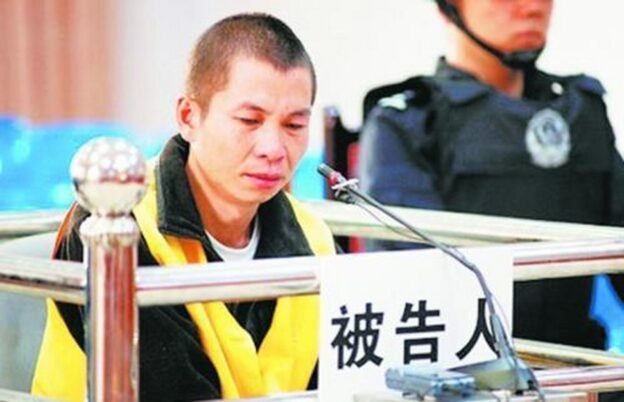
On July 15, 2010, the Zhaotong Intermediate People’s Court of Yunnan Province, after trial, found that the criminal suspect Li Changkui in the “5.16” rape and murder case had used especially cruel methods, with especially vile circumstances and especially serious consequences. His crimes were extremely grave and caused enormous social harm, and he should be severely punished according to law. Although Li Changkui had the circumstance of voluntary surrender, it was not enough to mitigate his punishment. Li Changkui was sentenced to death for intentional homicide, deprived of political rights for life, and sentenced to five years’ imprisonment for rape. The combined punishment for multiple crimes was decided as the death penalty, deprived of political rights for life. He was also ordered to compensate the victims’ family members, Wang Tingli and Chen Lijin, 30,000 yuan for economic losses.
On March 4, 2011, the Yunnan Provincial Higher People’s Court, after trial, held that the facts found in the original judgment were clear, the conviction was accurate, and the trial procedures were lawful, but the sentencing was excessively heavy. Li Changkui had surrendered to the public security organ after committing the crime and truthfully confessed the facts of the crime. He had the circumstance of voluntary surrender, a good attitude of admitting guilt and repentance, and actively compensated the victims’ family members for economic losses. Li Changkui was sentenced to death with a two-year suspension of execution.
Two different judgments, a “death-exemption card” differing by a single word, and the final ruling of a suspended death sentence immediately caused an uproar among the general public. The victims’ family members formally expressed dissatisfaction with the judgment to the relevant authorities, appealed to the court, and requested the initiation of trial supervision procedures, the revocation of the final judgment, and a retrial sentencing Li Changkui to death in accordance with law.
The retrial of the Li Changkui intentional homicide and rape case was held at 8:30 a.m. on August 22, 2011, in Zhaotong City. A collegial panel formed by the Yunnan Provincial Higher People’s Court conducted the retrial. The retrial procedure was as follows: the rape portion would first be heard in closed session, and the homicide portion would be heard in open session at 9:30.
The retrial held that the defendant Li Changkui, after his marriage proposal was rejected and due to other trivial disputes between the two families, harbored thoughts of revenge. After raping and killing Wang Jiafei, he also cruelly killed the 3-year-old Wang Jiahong. His acts constituted the crimes of rape and intentional homicide respectively. The criminal methods were especially cruel, the circumstances especially vile, the consequences especially serious, and the social harm enormous. There was insufficient basis to mitigate his punishment. Therefore, the original second-instance suspended death sentence was revoked, and the sentence was changed to death, deprived of political rights for life, and reported to the Supreme People’s Court for approval.
On September 29, 2011, with the approval of the Supreme People’s Court, Li Changkui, who had intentionally killed Wang Jiafei and her younger brother and raped Wang Jiafei, was lawfully executed by immediate death penalty in Zhaotong City, Yunnan Province.
In the eyes of the villagers, Li Changkui was ordinarily not a vicious person. They even felt that Li Changkui was sensible and upright, and they had never seen him quarrel or fight with anyone. He counted as a good young man. How did a good young man turn into a vicious murderous demon? I think the main reason was that the accumulated resentment in his heart could not be resolved in time, and it eventually became a powder keg that exploded at the slightest spark.