I. Prologue: A Bicycle Without a License Plate
On the evening of October 5, 2007, at the intersection of Pusan Road and Zhijiang West Road in Zhabei District, Shanghai. It was the last few days of the National Day holiday, and there were already few pedestrians on the street. A young man riding an unlicensed and undocumented bicycle was stopped by patrolling police officers, who asked him to produce his ID and proof of the bicycle’s origin.
The man was Yang Jia, then 27, a native of Beijing with a secondary vocational school education and no legitimate occupation. He refused to cooperate. According to a subsequent notice from Shanghai police, Yang Jia refused to show his ID and also refused to provide proof of the bicycle’s origin, causing citizens to gather and affecting traffic, so the police took him to the Zhijiang West Road Police Station for further investigation.
At the police station, police clarified Yang Jia’s true identity and also confirmed that the bicycle was rented. The whole process lasted about six hours: questioning continued from 10:15 that night until 2:30 the next morning, after which Yang Jia rested at the police station until 8 a.m. and left on his own, returning to Beijing that day. Police later played a recording of the on-site questioning at a press conference, attempting to prove that the officers had been “mild in speech and patient in attitude,” while Yang Jia had been “emotional, irritable, and stubborn.”
But Yang Jia’s understanding of this experience was completely different. He later denied to his lawyer that he had stolen the bicycle and also claimed that he had been beaten inside the police station. This claim was never confirmed by Shanghai police, but it became the starting point for his repeated complaints, demands for compensation, and eventual extreme actions over the following nearly nine months.
After leaving the police station, Yang Jia lodged multiple complaints through petition letters, emails, and other means with the Shanghai Public Security Bureau and the supervision department of the Zhabei Public Security Sub-bureau. His demands included: dismissing the officers involved from public office and compensating him for mental distress and telephone charges, totaling 10,000 yuan. After verification, the supervision detachment of the Zhabei Sub-bureau held that the officers’ law enforcement had been lawful and proper, with no impropriety. The detachment also sent people to Beijing twice to provide legal education and persuasion to Yang Jia, but Yang Jia “ignored them all.”
The dispute over the amount of compensation was one of the key points of stalemate between the two sides. Sources familiar with the matter revealed that Yang Jia had demanded 30,000 yuan in administrative compensation from the police station, which was not agreed to. Yang Jia’s defense lawyer, Xie Youming, later said after conversations with Yang Jia that “Yang Jia was not doing it for money.” Whatever his true motive, by the summer of 2008 Yang Jia had made a decision.
II. The Incident
(1) Morning of July 1, 2008: Arson, Break-In, and Ground-Floor Killing
July 1, 2008, a Tuesday, an ordinary weekday morning. The Shanghai Zhabei District Political and Legal Affairs Office Building is located on Tianmu West Road. It is a comprehensive office building that also houses the organs of the Zhabei Public Security Sub-bureau. The building’s entrance also serves as a convenient public service channel. The first and second floors house public-facing windows for resident ID card processing and petition handling, and are normally open to the public. Entry and exit are not as heavily guarded as people might imagine.
At around 9:40 a.m., Yang Jia appeared outside the building. He carried eight beer bottles filled with gasoline, a single-edged boning knife, a dust mask, and a waist bag (containing a hammer, tear gas sprayer, trekking pole, and other items).
His first step was to create chaos. Yang Jia smashed two beer bottles at the police car parking area on Tianmu West Road, but they did not ignite; he then threw five bottles at a flower bed three or four meters west of the main gate and set them on fire, and flames broke out. Security guards immediately stepped forward to stop him and organize firefighting. Taking advantage of the chaos, Yang Jia threw the last beer bottle at the guards, then, holding the knife in his right hand and wearing the dust mask, darted into the building through the convenient public service channel.
After entering, Yang Jia saw security guard Gu Jianming making a phone call and struck him on the head with the knife handle, causing a laceration on Gu’s head that required four stitches. Then, holding a knife in one hand and tear gas in the other, he entered the ground-floor lobby corridor and the public security duty room, launching a sudden attack on the officers at work.
The first to fall was Ni Jingrong, 47, director of the service center of the logistics department. Next were Fang Fuxin, 50, an officer of the public security detachment; Zhang Yijie, 56, an officer of the public security detachment; and Zhang Jianping, 47, an officer of the North Station Police Station. All four were caught off guard, stabbed in vital areas, and died after losing too much blood.
Forensic identification later recorded the brutality of the wounds: Zhang Jianping had a 21-centimeter wound on his left shoulder, a 13-centimeter wound on his left chest, an 18-centimeter wound on his right chest, and a 7.5-centimeter wound on his right armpit, with three stab wounds penetrating the chest cavity; Fang Fuxin had a 16-centimeter wound on his left chest, piercing the left chest and left lung; Zhang Yijie had an 11-centimeter wound on his left armpit, reaching deep into the chest cavity; Ni Jingrong had a 9-centimeter cut on the left side of his neck, with multiple ruptures of the carotid artery and jugular vein. Yang Jia’s knife technique was clearly directed—at the carotid artery and the heart, with an upward thrust—a method that caused death from massive blood loss in an extremely short time.
(2) Climbing the Fire Escape: From the First Floor to the Ninth Floor
After committing the crimes on the ground floor, Yang Jia did not leave through the main entrance but climbed upward via the fire escape on the south side of the building. The weak point in the building’s security was fully exposed at this moment: the fire escape was unguarded, and he encountered no obstruction whatsoever.
Yang Jia climbed to the ninth floor and encountered officer Xu Weiya, 48, of the traffic police detachment. Yang Jia launched a sudden attack with his knife. Xu Weiya was stabbed in multiple places and fell to the ground, with a 14-centimeter wound on his left cheek, a 5-centimeter wound on his forehead, and multiple stab wounds on his right chest and abdomen. Xu Weiya was later sent to the hospital for emergency treatment and survived.
Yang Jia continued upward. On the eleventh floor, he attacked officers who were working. After that, he returned to the fire escape and headed straight for the twenty-first floor.
(3) The Twenty-First Floor: The Final Confrontation
The twenty-first floor housed the discipline inspection and supervision office. When Yang Jia rushed in holding the boning knife, there were multiple officers inside. This time, he was no longer able to succeed easily. Seven officers worked together to subdue him. By then, about twenty minutes had passed since he entered the building.
The casualty figures later tallied were: six officers dead, two officers lightly injured, and one officer and one security guard slightly injured. The six dead were Ni Jingrong, Fang Fuxin, Zhang Yijie, Zhang Jianping, and two other officers attacked on the eleventh floor. Their average age was 50, and most were engaged in clerical, logistics, or technical work, not frontline combat police.
Criminal psychologist Li Meijin later noted when analyzing the case that comprehensive police office buildings are a “soft underbelly” in terms of security: “Police have different types of units. Only public security police and criminal police receive combat-type training. Many office police do secretarial work.” Yang Jia’s choice of this building as his target was not accidental. Sources familiar with the matter revealed that before the final action, Yang Jia had scouted near a police station for several days but gave up because the station’s gate was too small to rush into, and ultimately turned his target to the Zhabei Sub-bureau office building.
(4) After Arrest: The First Interrogation and the Arrival of Lawyers
After being subdued, Yang Jia was taken to a special interrogation room on the second floor of the Zhabei Public Security Sub-bureau. He refused to answer police questions and demanded the presence of a lawyer.
At 10:40 that morning, Xie Youming, director of the Mingjiang Law Firm in Zhabei District, received a call from the Zhabei District Procuratorate asking him to come to the political and legal affairs building. Xie Youming had another identity: legal adviser to the Zhabei District government. His law firm was only a five-minute drive from the political and legal affairs building. Around 11 o’clock, he arrived by car and saw dense police and cordon lines.
Outside the interrogation room, Xie Youming was briefly informed of the case. Because Yang Jia refused to accept police questioning and demanded a lawyer, the police and procuratorate discussed on the spot and concluded that the earlier refusal to answer could be counted as the first interrogation, meeting the conditions for lawyer intervention. Xie Youming called his colleague Xie Jin, and the two met with Yang Jia together.
Xie Youming later recalled that Yang Jia showed an unusual sensitivity to legal procedures. The first thing he did after meeting was ask to see their lawyer’s licenses, and Xie Youming and his colleague flipped through the pages for him one by one. Yang Jia then asked a series of questions: What area of law did Xie Youming practice? How much were lawyer fees? Why could it be free? What rights did the law provide him? When police collected a blood sample from Yang Jia’s hand, Yang Jia asked the lawyer whether that was allowed; when a reporter came in to take photographs, he stopped the conversation and asked the lawyer whether he had the right to prevent the reporter from taking pictures.
Xie Youming tactfully asked Yang Jia whether he had a history of mental illness, and Yang Jia firmly denied it. During the two-hour conversation, Xie Youming felt that Yang Jia was “very calm, narrated things smoothly, and showed no emotional fluctuation, as if he were telling someone else’s story.” Only when talking about his mother did Yang Jia become somewhat moved—his mother had divorced his father very early and had worked hard to raise him alone. Yang Jia deliberately avoided the process of attacking the police, saying only that he had come to the sub-bureau to “take a look”; as for the boning knife, he said he had picked it up on the twenty-first floor.
III. After the Incident: Public Opinion, Rumors, and Procedural Controversies
(1) Police Notice and the “Bicycle Theft Revenge” Narrative
At around 4 p.m. on the day of the incident, a news item appeared on the website of the Shanghai Public Security Bureau, stating that “according to Yang’s confession, he was dissatisfied with the review by the Zhabei Sub-bureau of the Shanghai Public Security Bureau in October 2007 on suspicion of bicycle theft, and in order to retaliate against public security officers, carried out the criminal act.” More than two hours later, the news item was removed, and police said the criminal motive required further review.
On July 7, the Shanghai Public Security Bureau held a special press conference, with three deputy directors present, and announced the official detailed version of events. Police emphasized that during the October 2007 questioning, the officers had “completely exercised their powers in accordance with the law,” that Yang Jia’s complaints were “unreasonable,” and that the supervision department “expressed sufficient goodwill.” The press conference also played a recording of the questioning. This narrative characterized the case as a revenge killing caused by an individual’s unreasonable demands not being satisfied, attempting to cut off the public’s imagination linking Yang Jia’s actions to institutional problems.
(2) The Fermentation of Rumors and Suppression
Soon after the incident, another account began circulating on the Internet. On July 2, a Suzhou youth named Jia Xiaoyin published an article online titled “Inside Story of the Shanghai Police Attack Incident,” fabricating content claiming that Yang Jia had retaliated by attacking police because he had been beaten by Zhabei Sub-bureau officers, injuring his genitals and rendering him infertile. The post was widely reposted and caused an uproar. On July 14, Shanghai procuratorial authorities approved the arrest of Jia Xiaoyin on suspicion of defamation, and police said he had “used the Internet to fabricate facts, seriously damaging the reputation of law enforcement officers and the image of public security organs.”
Meanwhile, the whereabouts of Yang Jia’s mother, Wang Jingmei, also became a focus of public opinion. On July 2, the day after the incident, Wang Jingmei lost contact with her family. On July 17, Yang Jia’s aunt reported Wang Jingmei missing to the Datun Police Station in Beijing. However, two days later, the Shanghai Bar Association publicly stated that Yang Jia had formally retained Xie Youming and Xie Jin as defense lawyers for the trial stage. Yet when Yang Jia had earlier refused to meet the defense lawyer retained by his father, the procuratorate’s record showed that Yang Jia would only accept “a defense lawyer retained by his own mother.” The connection between Wang Jingmei’s “disappearance” and the lawyer retention procedure sparked fierce questioning within the legal profession.
(3) Dispute Over the Defense Lawyer’s Qualifications
Xie Youming’s identity became the core of the procedural controversy. He was not only the defense lawyer in Yang Jia’s case but also the legal adviser to the Zhabei District government—and the work unit of the murdered officers and the public security organ investigating the case were both subordinate departments of the Zhabei District government. On July 30, sixteen lawyers from eight law firms in Beijing jointly sent letters to the Ministry of Justice, the Shanghai Justice Bureau, the All China Lawyers Association, and the Shanghai Bar Association, requesting an emergency investigation and handling of Xie Youming’s illegal and disciplinary conduct in representing Yang Jia’s case.
Fellow lawyers also pointed out that Xie Youming had made a series of statements unfavorable to Yang Jia in media interviews, such as saying that Yang Jia was “mentally normal and had a strong legal awareness,” and implying that “for crimes as serious as Yang Jia’s, generally speaking, there is almost no question about the sentence.” These statements were criticized as essentially abandoning the defense stance before trial.
In addition, there was controversy over Yang Jia’s mental condition. Xie Youming believed after contact with Yang Jia that he was mentally normal; but another well-known lawyer, Zhai Jian, after three contacts with Yang Jia, publicly stated that “Yang Jia’s mind has problems,” believing that his behavior matched descriptions of paranoid, impulsive, and antisocial personality disorders. The appraisal conclusion issued by the Institute of Forensic Science of the Ministry of Justice was: Yang Jia had full criminal responsibility capacity.
IV. The Verdict
On September 1, 2008, the Shanghai No. 2 Intermediate People’s Court issued the first-instance judgment in the Yang Jia case, sentencing Yang Jia to death for intentional homicide and depriving him of political rights for life. Yang Jia was dissatisfied and appealed.
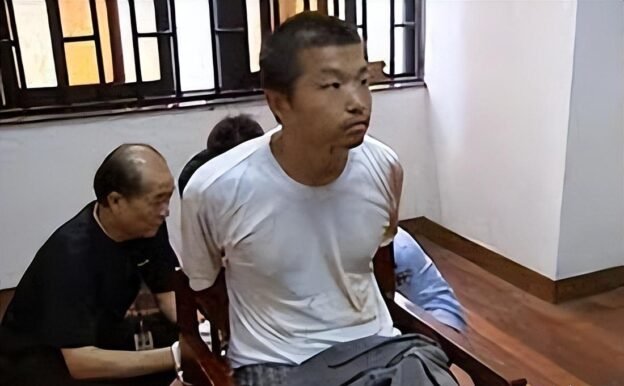
On October 20, the Shanghai Higher People’s Court issued the final ruling, rejecting the appeal, upholding the original judgment, and submitting it to the Supreme People’s Court for approval in accordance with law. The second-instance pronouncement lasted thirty minutes. Yang Jia, wearing a sky-blue T-shirt and dark blue trousers, was brought into the courtroom by bailiffs “still expressionless,” and throughout the judge’s reading of the ruling, he “remained quiet and did not say a word.” The audience included forty-four media personnel, among them reporters from overseas media such as Japan’s Yomiuri Shimbun, Singapore’s Lianhe Zaobao, and Hong Kong’s Ta Kung Pao.
The Supreme People’s Court confirmed upon review: Yang Jia, dissatisfied with the police questioning in October 2007 and the handling of his complaints, after careful premeditation and meticulous preparation, broke into the office building of the Zhabei Public Security Sub-bureau on July 1, 2008, and attacked with a knife, causing six officers dead, two lightly injured, one slightly injured, and one security guard slightly injured. The Supreme People’s Court held that Yang Jia “killed in revenge to vent personal spite, with particularly cruel criminal means, particularly egregious criminal circumstances, extremely serious consequences and crimes, and great social harm,” and approved the death penalty in accordance with law.
On the morning of November 26, 2008, Yang Jia was executed by lethal injection in Shanghai. Before execution, he met with his mother, Wang Jingmei. Sources familiar with the matter revealed that before execution Yang Jia appeared normal, and after drinking porridge he was taken away by a police vehicle from the first-instance court.