I. Introduction
On the morning of December 22, 2003, the Supreme People’s Court, at the Jinzhou Intermediate People’s Court in Liaoning Province, rendered a judgment in the retrial of the Liu Yong case: Liu Yong was sentenced to death for intentional injury, with deprivation of political rights for life; combined with the punishments for the other crimes he had committed, the decision was to execute the death penalty, with deprivation of political rights for life. After the sentencing, Liu Yong was executed the same day.
The reason this case attracted nationwide attention at the time was not only that Liu Yong was the head of a gang-like criminal organization that had run rampant in Shenyang for years, but also because of the rare twists and turns in its trial process: death sentence at first instance, changed on appeal to death with a two-year reprieve, and ultimately changed back to death by the Supreme People’s Court through a retrial it personally conducted. This was the first time since the founding of the People’s Republic that the Supreme People’s Court had conducted a retrial of an ordinary criminal case. From Liu Yong’s capture in July 2000 to his execution in December 2003, the judicial proceedings of this case drew countless eyes and became an inescapable landmark case in the progress of the rule of law in China’s campaign against gang crime.
II. Liu Yong and the Formation of His Organization
Liu Yong was a native of Shenyang, Liaoning Province. Before becoming a “gangland overlord,” he was merely a small-time hoodlum on Taiyuan Street in Shenyang. In September 1989, Liu Yong, together with Song Jianfei and five others, beat and injured the victim Ning Yong, causing Ning Yong’s spleen to be removed. This was one of his earlier acts of violence that brought him to police attention. On October 6, 1992, Liu Yong committed another major crime: to exact revenge for someone, he and others, near Zhongshan Square in Heping District, Shenyang, attacked and stabbed the victim Zhang Shaobo with a hunting rifle and a bayonet, causing minor injury. Police officers Liu Baogui and Sun Ming of the Heping Branch of the Shenyang Public Security Bureau, who were nearby, came to intervene upon hearing of it. Liu Baogui identified himself and fired a warning shot, and Sun Ming ordered Liu Yong to put down the hunting rifle. Liu Yong ignored them and fired at Liu Baogui, hitting Liu Baogui in the right hip. Liu Yong afterward fled to Guangzhou, but was captured not long after; yet under the protection of his network of connections he was quickly released on bail pending trial.
This case of shooting a police officer, legally speaking, did not reach a final result for a very long time. The victim Liu Baogui petitioned for years demanding that Liu Yong be punished, but the case never moved forward. This detail itself reveals Liu Yong’s special power in Shenyang: a man who shot and injured a police officer could go unpunished and over the following years gradually build a business empire with violence as its underlying color.
Around 1995, Liu Yong’s criminal organization began to take initial shape. Relying on the Shenyang Jiayang Group, he successively joined with Song Jianfei, Wu Jingming, Dong Tieyan, Li Zhiguo, Cheng Jian, and others to form a basically fixed criminal organization of a gang-like nature. The operating logic of this organization was clear and brutal: use violence to eliminate competitors and seize economic benefits, then use economic strength to corrupt power and seek protection, which in turn further consolidated its capacity for violence.
According to the findings of the Supreme People’s Court on retrial, the gang-like criminal organization organized and led by Liu Yong carried out a total of 31 illegal activities. Among them, he directly participated in or instructed or instigated others to commit 13 acts of intentional injury, causing 1 death, 5 serious injuries resulting in 4 persons with severe disabilities, and 8 minor injuries; instructed others to commit 4 acts of intentional destruction of property; 1 act of illegal business operation, with an operating amount of 72 million yuan; 6 acts of bribery of state functionaries, equivalent to more than 1.27 million yuan; instructed others to commit 1 act of obstructing official duties; and illegally possessed 1 firearm.
III. Course of the Case
(I) Early Violence: From Street Slashings to Shooting a Police Officer
The violent acts of Liu Yong’s organization displayed a characteristic of unbridled recklessness from an early stage. In 1989 he beat Ning Yong and caused the removal of his spleen; in July 1991 he injured Tong Junsen; in July 1992 he injured Sun Shupeng; and in October 1992 he shot Liu, the chief of a police station. The victims in these cases had different identities, but the common point was this: after carrying out violence, Liu Yong did not receive legal punishment commensurate with the severity of his acts. This experience of “getting away with it” undoubtedly reinforced his path dependence on violence.
After shooting Liu Baogui in 1992, although Liu Yong was detained for a time, he was quickly released on bail pending trial. In the following years he not only failed to restrain himself but expanded his power in a more organized manner. From late 1995 to July 2000, when he was taken down by Shenyang police, over four and a half years the organization committed a total of 47 crimes, causing 42 deaths and injuries, including 1 death, 16 serious injuries, and 14 minor injuries.
(II) Sustaining the Gang Through Business: The Violent Expansion of the Baijia Group
Liu Yong’s “business map” was inseparable from his violent expansion. In early 1995, with the help of Gao Mingxian, former deputy director of the Heping District Labor Bureau of Shenyang, and Ling Dexiu, the director, he contracted the Zhonghua Shopping Mall under that bureau. In 1996 and 1997, again on the recommendation of Gao Mingxian and Ling Dexiu, he was successively elected a member of the Heping District CPPCC of Shenyang and a deputy to the Shenyang People’s Congress. At the time of the recommendations, Gao Mingxian and Ling Dexiu deliberately concealed the fact that Liu Yong had been detained by public security organs in connection with the police-shooting case. In return, between 1995 and 1998, Liu Yong, under the pretext of paying Spring Festival visits, successively gave Gao Mingxian 60,000 yuan and Ling Dexiu 20,000 yuan.
With a political identity as cover, Liu Yong’s violent behavior became even more unbridled. On the morning of June 11, 1998, three staff members of the Liaoning Provincial Institute of Technical Supervision Information came to the first chain store of the “Baijia” self-service shopping mall to conduct a law enforcement inspection. They found that some goods sold on the counters had no Chinese labels and no production dates and were prohibited from sale, so they made an on-site inspection record and decided to register and seal them. Liu Yong did not take these law enforcement officers seriously. When the three law enforcement officers left and reached the north entrance of Taiyuan Street, they were suddenly attacked by a group armed with folding daggers. Guo was stabbed twice in the left thigh, and the third stab was aimed at his abdomen; the north entrance of Taiyuan Street was instantly a scene of blood. Afterward, Wu Jingming walked into Liu Yong’s office and reported that “those three have been beaten,” and Liu Yong said: “Well done!”
The “6·11” bloody incident shocked Shenyang after being reported by the media, but the case was suppressed by relevant handling personnel of the public security sub-bureau and left unresolved for a long time. This situation of “beating people for nothing” was one of the key conditions enabling Liu Yong’s organization to continue to expand.
(III) The Fatal Case: The Death of Wang Yongxue
Among the intentional injury crimes committed by Liu Yong’s organization, the one that directly led to the death sentence was the case that caused one death. In October 1999, Liu Yong learned that someone was selling “Yunwu Mountain” brand cigarettes, which affected his distribution of the same brand, and instructed Cheng Jian to go to the market to investigate and “deal with” the traders selling that brand of cigarettes. On the morning of October 15 of the same year, at the Nanshi Farmers Market in Heping District, Shenyang, after Cheng Jian sent people to identify him, Song Jianfei, Wu Jingming, Dong Tieyan, Li Zhiguo, and others beat the trader Wang Yongxue, who sold “Yunwu Mountain” brand cigarettes, and Song Jianfei threatened others with “let’s see who dares to sell Yunwu Mountain cigarettes.” Wang Yongxue died of rupture of the right hilum and right atrium, acute hemorrhagic shock complicated by cardiac tamponade.
The logic of this case was naked and simple: a trader sold the same brand of cigarettes that Liu Yong distributed, affecting his business, and so was beaten to death in public. This was not a plot from a gangster movie but a real event that occurred in a Shenyang farmers market in 1999. Liu Yong confessed during the investigation stage on multiple occasions to having given the instructions, but later recanted at trial, arguing that Song Jianfei and others beat Wang Yongxue to take revenge for a person nicknamed “Old Fox.” The Supreme People’s Court reviewed this defense on retrial and pointed out that “Old Fox” Zhao Dejun himself denied knowing Wang Yongxue; the statements of Cheng Jian, Song Jianfei, and others all proved that the beating was instructed by Liu Yong and for Liu Yong’s benefit; and Wang Yongxue’s wife also proved that her husband had no conflict with Zhao Dejun. Liu Yong’s defense was inconsistent with the ascertained facts and was not adopted.
(IV) Demolition Violence and the Zhongjie Pharmacy Incident
In April 1999, after obtaining the right to use state-owned land in the second section of Zhongyang in Shenhe District, Shenyang, for the purpose of building the Baijia Shopping Plaza, Liu Yong instructed Song Jianfei and Wu Jingming to use violence to force the rapid demolition of buildings within the land area. On the morning of May 14 of the same year, when Song Jianfei and others came to demolish the Zhongjie Pharmacy operated by Liu Fengjiang, they clashed with the pharmacy’s employees. Liu Yong rushed to the scene upon learning of it, and under his instructions Song Jianfei, Wu Jingming, Dong Tieyan, Li Zhiguo, and others rushed into the pharmacy armed with bayonets, machetes, and baseball bats, chased and beat the pharmacy manager Dai Yi, causing minor injuries to his face and legs, smashed items in the pharmacy, and destroyed property worth 14,670 yuan. The group then broke into the adjacent Li Liangui Smoked Meat and Pancake Restaurant and the Taiwan Country Beef Noodle Restaurant, beat waiters, and smashed door and window glass and items inside the stores.
Afterward, the Liaoshen Evening News reported the incident under the title “Zhongjie Pharmacy Encounters Thugs in Broad Daylight.” Liu Yong was very displeased after seeing the report. The pharmacy operator Liu Fengjiang, fearing retaliation, was forced to publish a statement in the Liaoshen Evening News saying the earlier report was erroneous. Victims not only had to endure violence but also had to publicly deny after the violence that it had ever occurred. This secondary suppression of victims was a customary means by which Liu Yong’s organization maintained its reign of fear.
(V) Protective Umbrellas: From “Godfather” to “Godmother”
The reason Liu Yong could run rampant in Shenyang for years was inseparable from the network of relationships he carefully built. Among his most direct “protective umbrellas,” the way the relationships operated had a distinctly “familial” flavor: Liu Shi, former chief procurator of the Shenyang People’s Procuratorate, was Liu Yong’s “godfather”; Gao Mingxian, deputy director of the Heping District Labor Bureau, was his “godmother”; and Jiao Meigui, former vice president of the Shenyang Intermediate People’s Court, had a close relationship with him.
The relationship between Liu Shi and Liu Yong was especially typical. In the first half of 1997, Liu Yong gave 200,000 yuan to Liu Shi, then president of the Shenyang Intermediate People’s Court. In November of the same year, Liu Shi handled the procedures for Liu Yong to go to the United States in the capacity of a staff member of the Shenyang Intermediate People’s Court. During his time in the United States, Liu Yong gave Liu Shi another 30,000 US dollars. That a gang leader went abroad in the capacity of a court staff member—the absurdity and danger of this need hardly be stated.
Liu Yong’s father, Liu Hanqi, was formerly the chief of the First Criminal Division of the Shenyang Intermediate People’s Court and was both a subordinate and a drinking buddy of Liu Shi. It was Liu Hanqi who introduced his son to Liu Shi. Power and personal connections intertwined in this circle into an airtight net, making it almost unnecessary for Liu Yong to consider the consequences when carrying out violence.
(VI) Police Secret Investigation and the Closing of the Net
The Shenyang Public Security Bureau’s attention to Liu Yong did not begin in 2000. As early as the succession of beating, smashing, and slashing cases in Shenyang since 1997, Liu Yong and his gang members had already been major suspects. But the old case involving Liu Yong and the former public security chief remained unresolved, new cases occurred frequently, and he held the identities of a municipal people’s congress deputy and an “outstanding private entrepreneur,” all of which required the police to act with extreme prudence.
On May 25, 2000, Shenyang Public Security Bureau chief Yang Jialin and deputy chief Yu Lingshun, who was in charge of criminal investigation, convened a meeting at the criminal police detachment attended by only six people. At the meeting, personnel involved in the earlier secret investigation reported the evidence gathered through informants and technical means: at least two major criminal cases could be proven to have been carried out by thugs at Liu Yong’s instruction, and Liu Yong was a major suspect in eight other major cases. Yang Jialin proposed establishing a special task force; because the day was May 25, the task force was named the “5·25” Special Task Force.
On June 26, Yang Jialin and Yu Lingshun reported to the municipal party committee and municipal government leaders in charge of political and legal affairs on what the secret investigation had uncovered and requested approval for action. Zhu Jin, deputy secretary of the municipal party committee, stated: “Do not think too much about success or failure. Go ahead boldly—the Party and the government are your strong backing!”
On July 1, 2000, the operation entered its countdown. On July 11, Liu Yong was criminally detained by the Shenyang Public Security Bureau, and on August 10 of the same year he was approved for arrest by the Shenyang People’s Procuratorate. With Liu Yong’s capture, this gang-like criminal organization that had entrenched itself in Shenyang for years began to disintegrate. Liu Yong’s capture also brought to light the collusion between a number of officials in Shenyang’s “one government and two courts” and the underworld. The emergence of corruption cases involving then Shenyang mayor Mu Suixin, executive vice mayor Ma Xiangdong, and others was inseparable from the destruction of Liu Yong’s group.
IV. The Trial Process
(I) First Instance: The Tieling Intermediate Court Sentences Death
On April 17, 2002, the Tieling Intermediate People’s Court of Liaoning Province publicly pronounced the first-instance judgment in the case of Liu Yong and 21 others for organizing and leading a gang-like criminal organization and intentional injury, among other crimes. The court, on multiple charges including organizing and leading a gang-like criminal organization, intentional injury, illegal business operation, intentional destruction of property, bribery, obstructing official duties, and illegal possession of firearms, sentenced the defendants Liu Yong and Song Jianfei to death, and the other 20 persons to death with reprieve, life imprisonment, or fixed-term imprisonment respectively. After the first-instance judgment, Liu Yong and others appealed.
(II) Second Instance: The Liaoning High Court Changes the Sentence to Death with Reprieve
On August 15, 2003, the Liaoning Provincial High People’s Court rendered the final judgment in the Liu Yong case. The second-instance judgment revoked the sentencing portion of the first-instance judgment concerning Liu Yong’s intentional injury conviction, found Liu Yong guilty of intentional injury, and sentenced him to death with a two-year reprieve.
The reasons for the Liaoning High Court’s change of sentence were concentrated in its findings on the issue of torture to extract confessions. The second-instance judgment held that there had been no change in the main criminal facts and evidence found at first instance concerning Liu Yong and that they should be confirmed. However, as to the defense and defense opinions raised by Liu Yong and his lawyers that public security organs had used torture to extract confessions during interrogation, upon review it “could not fundamentally rule out the existence of torture to extract confessions by public security organs during the investigation process.” At the same time, the second-instance court held that Liu Yong was the principal member of a gang-like criminal organization and should be punished for all the crimes committed by the organization he organized and led; his crime of intentional injury should by law be punished by death, but “in view of the facts, nature, circumstances of his crimes and the degree of harm to society, as well as the specific circumstances of this case,” the death penalty need not be executed immediately.
After this judgment was announced, public opinion was in an uproar. That a gang leader who had caused one death and serious injuries and disabilities to many others could have his sentence changed from death to death with reprieve under the vague formulation “cannot rule out torture to extract confessions”—the public’s confusion and dissatisfaction were only to be expected. The case drew great attention from the Supreme People’s Court.
(III) Retrial: The Supreme People’s Court Conducts the Retrial and Changes the Sentence Back to Death
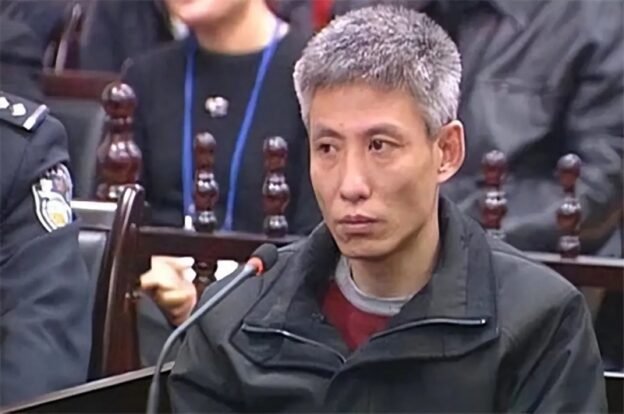
On the morning of December 18, 2003, the Supreme People’s Court held a retrial hearing in the Liu Yong case at the Jinzhou Intermediate People’s Court in Liaoning Province. The Supreme People’s Court formed a collegial panel in accordance with law, and the Supreme People’s Procuratorate assigned procurators to appear in court to support the prosecution. This was the first time since the founding of the People’s Republic that the Supreme People’s Court had conducted a retrial of an ordinary criminal case.
The retrial hearing lasted several days. The collegial panel of the Supreme People’s Court reviewed one by one the various defenses raised by Liu Yong and his lawyers. Regarding Liu Yong’s defense denying that he had instructed the beating of Wang Yongxue, the panel, based on witness testimony, the statements of co-defendants, and Liu Yong’s own multiple confessions during the investigation stage, found that his defense was inconsistent with the facts and did not adopt it. Regarding the issue of torture to extract confessions, the retrial judgment did not adopt the second instance’s formulation of “cannot fundamentally rule out” but instead, on the basis of evidence presented and cross-examined at trial, made an independent finding on Liu Yong’s criminal facts.
On the morning of December 22, the Supreme People’s Court rendered the retrial judgment. The judgment found: Liu Yong was the principal member of a gang-like criminal organization and should bear criminal responsibility for all the crimes of the organization. He directly committed, or instructed or instigated others to commit, intentional injury with knives and guns, causing 1 death, 5 serious injuries resulting in 4 persons with severe disabilities, and 8 minor injuries; the means were especially cruel, the circumstances especially vile, the crime extremely serious, and the harm to society extremely great, and there were no statutory or discretionary circumstances for lighter punishment; he should be sentenced to death and executed immediately in accordance with law.
The Supreme People’s Court sentenced Liu Yong to death for intentional injury, with deprivation of political rights for life; combined with the punishments for the other crimes he had committed, the decision was to execute the death penalty, with deprivation of political rights for life. After the sentencing, the Tieling Intermediate People’s Court of Liaoning Province, in accordance with the execution order issued by the Supreme People’s Court, executed Liu Yong the same day.