I. Case Background: A Homicide from Twenty-Two Years Earlier
The core facts of the Zhang Koukou case cannot be understood apart from the neighborhood conflict that occurred in 1996. The criminal motive recognized by the court in Zhang Koukou’s trial points directly to this old case.
Zhang Koukou’s family and Wang Zixin’s family were neighbors in Wangping Village, Xinji Town, Nanzheng District, Hanzhong City, Shaanxi Province. On August 27, 1996, the two families clashed over a neighborhood dispute. During the conflict, Wang Zhengjun, the third son of Wang Zixin (then 17 years old), intentionally caused the death of Zhang Koukou’s mother, Wang Xiuping.
Regarding the cause of the 1996 conflict, CCTV reporters learned from local village cadres and villagers after the case that Wang Xiuping and Wang Zixin’s family had a dispute over a foundation boundary, which later escalated. According to media reports, Wang Xiuping displayed extreme behavior during the conflict, and Wang Zhengjun struck her temple with a wooden club, causing her death.
On December 5 of the same year, the former Nanzheng County People’s Court issued a judgment in the case. The court found Wang Zhengjun guilty of intentional injury, but given that he was under eighteen at the time of the crime, that he confessed frankly, that his father had paid the funeral expenses on his behalf, and that the victim Wang Xiuping bore some fault for triggering the case, the court imposed a lighter sentence in accordance with the law: seven years in prison. As for civil compensation, the court ordered Wang Zixin to pay 9,639.3 yuan in one lump sum to Zhang Koukou’s father, Zhang Furu, as economic losses; the payment was fulfilled.
After the judgment, the procuratorial organ did not protest, Wang Zhengjun did not appeal, and Zhang Furu did not appeal regarding the compensation; the judgment thus became legally effective.
The 1996 case was brought to a close at the time in the form of an effective judgment. But for Zhang Koukou, the full stop never truly fell.
II. The Twenty-Two Years from the Old Case to the New Case
(I) Zhang Koukou’s Upbringing and Psychological Changes
The court found that after the 1996 case was handled, “the two families had no new conflicts, but Zhang Koukou harbored resentment over his mother’s injury and death, and coupled with long-term frustrations in work and life, his psychology gradually became unbalanced.” This formulation attributes Zhang Koukou’s criminal motive to two overlapping factors: persistent resentment over his mother’s death and dissatisfaction with his personal circumstances in adulthood.
Public reports on Zhang Koukou’s personal experiences during these twenty-two years are relatively scattered. According to a February 2018 report by China.com, Zhang Koukou was born in 1983 and went to Xinjiang to serve in the military in 2001. A unit leader once asked him why he had joined the army, and his answer was: “Joining the army lets me build up my body, so that I can avenge my mother in the future.” The unit leader spent several days doing ideological work with him at the time. This detail, disclosed by the media after the case, became an important clue for tracing his psychological state.
The same report also mentioned that Zhang Koukou had witnessed, and even directly participated in, the process of his mother being beaten to death in a fight, as well as the bloody scene of the forensic autopsy of his mother’s body, after which his personality became introverted. The long-term psychological impact of these early experiences was not systematically assessed as an independent sentencing circumstance in court, but it constitutes one dimension for understanding the background of his behavior.
(II) Preparation Before the Crime
The court found that before the Spring Festival of 2018, Zhang Koukou discovered that Wang Zhengjun had returned home for the holiday and formed the intent to take revenge and kill. This timing means that the interval from the formation of criminal intent to the actual act was roughly several days to a week.
During the preparation stage, Zhang Koukou prepared a single-edged knife, gasoline Molotov cocktails, a toy pistol, a hat, a mask, and other tools of the crime, and secretly observed the movements of Wang Zhengjun and his family. Judging from the list of tools, his preparations covered multiple purposes: killing (the single-edged knife), destroying property (the gasoline bombs), disguise (hat and mask), and possible deterrence or deception (the toy pistol). This shows that the crime was not a spur-of-the-moment act but had undergone a certain degree of planning.
III. The Day of the Crime: February 15, 2018 (Lunar New Year’s Eve)
(I) Choice of Time and Place
Zhang Koukou chose to act on New Year’s Eve. The court’s judgment described this as “choosing the day of New Year’s Eve to commit the crime in public.” New Year’s Eve is the local day for going up the mountain to pay respects to ancestors, and the Wang father and sons would appear in the village’s public areas according to custom, providing Zhang Koukou with a predictable time and place for the crime.
The scene of the crime was at the entrance of the former Sanmen Village Committee in Xinji Town, Nanzheng District, Hanzhong City. This is a public thoroughfare in the village, an area where villagers come and go in daily life.
(II) The Course of the Crime
At around 12:00 noon on February 15, 2018, Zhang Koukou saw Wang Zhengjun and his elder brother Wang Xiaojun going up the mountain with relatives to pay respects to ancestors. He put on a hat and mask as disguise, carried a single-edged knife and a toy pistol, and trailed Wang Zhengjun and Wang Xiaojun to the village committee entrance, where he waited.
When Wang Zhengjun and Wang Xiaojun returned from the ancestral rites, Zhang Koukou slashed and stabbed Wang Zhengjun several times in the neck, chest, and abdomen with the knife, and also stabbed Wang Xiaojun several times in the chest and abdomen. After initially stabbing the two to the ground, Zhang Koukou returned and stabbed Wang Zhengjun several more times, causing both to die. In the second instance, the court specifically noted “the circumstances of chasing Wang Xiaojun and inflicting secondary harm on Wang Zhengjun” to demonstrate that his “intent to kill was resolute.”
According to details confirmed by the Supreme People’s Court in its review, Zhang Koukou first “masked himself, held a sharp knife, and violently slashed Wang Zhengjun’s neck once, continuously stabbed him several times in the chest and abdomen, and chased the panicked and fleeing Wang Xiaojun, continuously stabbing him several times in the chest and abdomen, then returned and stabbed Wang Zhengjun several more times.” This description adds the element that Wang Xiaojun attempted to flee and that Zhang Koukou pursued him.
After killing Wang Zhengjun and Wang Xiaojun, Zhang Koukou then broke into Wang Zixin’s courtyard and stabbed Wang Zixin several times in the chest, abdomen, and neck with the knife, causing his death.
(III) Destruction of Property
After completing the killings, Zhang Koukou went home to fetch a kitchen cleaver and gasoline Molotov cocktails, smashed the left rear window of Wang Xiaojun’s car, and set the car on fire with the gasoline bombs, causing serious damage to the vehicle, with the damage valued at 32,142 yuan. The Supreme People’s Court’s review confirmed the wording: “used a homemade incendiary bottle to set fire to Wang Xiaojun’s family car, causing the rear part of the vehicle to burn.”
(IV) Escape and Surrender
After the crime, Zhang Koukou fled the scene. At around 7 a.m. on February 17, 2018, about two days after the crime, he surrendered to the public security organ.
From the crime at noon on February 15 to his surrender in the early morning of February 17, roughly more than forty hours passed. No detailed disclosure of Zhang Koukou’s whereabouts and actions during this period appears in public reports.
IV. Key Nodes After the Case Entered Judicial Proceedings
(I) First Instance
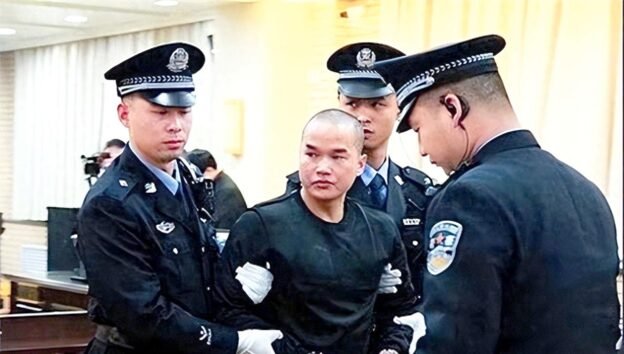
On January 8, 2019, the Hanzhong Intermediate People’s Court of Shaanxi Province held a public hearing and pronounced judgment in court. The court found Zhang Koukou guilty of intentional homicide and sentenced him to death with deprivation of political rights for life; guilty of intentional destruction of property and sentenced him to four years in prison; and decided to execute the death penalty with deprivation of political rights for life.
In its reasoning for the judgment, the court found: Zhang Koukou “premeditated revenge killing, chose the day of New Year’s Eve, committed the crime in public, and successively cut and stabbed the victims Wang Zhengjun, Wang Xiaojun, and Wang Zixin in the neck, chest, abdomen, back, and other vital areas for dozens of cuts in total, killing three people in succession”; “the criminal motive was base, the intent to kill was resolute, the criminal means were especially cruel, the circumstances were especially egregious, the consequences and the crime were extremely serious, and the personal danger and social harm were extremely great.” Regarding possible mitigating circumstances raised by the defense, the court explicitly stated: “Although this case arose from a cause, and Zhang Koukou was a first-time offender with the circumstance of voluntary surrender, these are not sufficient in law to impose a lighter punishment on him.”
After the verdict was pronounced, Zhang Koukou stated in court that he would appeal.
(II) Second Instance
On April 11, 2019, the Shaanxi Provincial High People’s Court held a public hearing in the Hanzhong Intermediate People’s Court and pronounced judgment in court.
In its ruling, the Shaanxi High Court further refined certain factual findings. Regarding the old 1996 case, the second-instance ruling added the details that Wang Zhengjun was sentenced to seven years in prison and that 9,639.3 yuan in compensation had been paid and fulfilled. Regarding the 2018 crime, the second-instance ruling added the background that “Wang Zhengjun, his brother Wang Xiaojun, and more than ten others went up the mountain to pay respects to ancestors,” as well as Zhang Koukou’s route of “trailing them to” the village committee entrance and waiting there.
The second-instance court’s reasoning on sentencing was basically consistent with that of the first instance, emphasizing that Zhang Koukou “harbored long-term resentment because his mother had been injured to death in 1996 by one of the victims in this case, Wang Zhengjun, and, coupled with frustrations in work and life, redirected his anger toward Wang Zhengjun and his family,” and specifically noted that “during the criminal process there were circumstances of chasing Wang Xiaojun and inflicting secondary harm on Wang Zhengjun.”
The Shaanxi High Court ruled in court to reject the appeal, uphold the original judgment, and submit it to the Supreme People’s Court for approval in accordance with law.
(III) Death Penalty Review and Execution
The Supreme People’s Court confirmed the facts found in the original judgment and made a clearer assessment in its reasoning: the victim Wang Zhengjun’s act of injuring Zhang Koukou’s mother to death had already been punished by law, but Zhang Koukou “nevertheless harbored resentment, and coupled with years of frustration in work and life, deliberately took revenge on Wang Zhengjun and Wang’s father and brother twenty-one years after his mother was killed, carefully planned the crime, chose the day of New Year’s Eve to commit the crime in public while masked and armed with a knife, causing the deaths of three victims, and there were circumstances of chasing Wang Xiaojun and inflicting secondary harm on Wang Zhengjun; the subjective malice was extremely deep, the criminal circumstances were especially egregious, the means were especially cruel, and the consequences and the crime were extremely serious.”
The Supreme People’s Court likewise found that although Zhang Koukou had the circumstance of voluntary surrender, it was not sufficient in law to impose a lighter punishment, and ruled to approve the death penalty.
On the morning of July 17, 2019, the Hanzhong Intermediate People’s Court executed Zhang Koukou in accordance with the death execution order signed by the President of the Supreme People’s Court. Before execution, the court arranged in accordance with law for Zhang Koukou to meet his close relatives.
V. Judgment Result
The Zhang Koukou case went through the first instance at the Hanzhong Intermediate People’s Court, the second instance at the Shaanxi Provincial High People’s Court, and the death penalty review by the Supreme People’s Court, and ultimately resulted in a death sentence with deprivation of political rights for life for intentional homicide; a four-year prison sentence for intentional destruction of property; and a decision to execute the death penalty with deprivation of political rights for life. On July 17, 2019, Zhang Koukou was executed.
The core judgment of the three levels of courts on sentencing reasoning was consistent: Zhang Koukou’s criminal acts were premeditated, involved the choice of a specific time (New Year’s Eve) and a specific manner (masked and armed with a knife in public), involved the consecutive killing of three people, and included circumstances of pursuit and secondary harm; the means were especially cruel and the consequences extremely serious. His voluntary surrender and the background that “the case arose from a cause” were both insufficient to offset the above aggravating factors.